
“…he who seeks to deceive will always find someone who will allow himself to be deceived.” (Machiavelli, 1532/2007)
“…he who seeks to deceive will always find someone who will allow himself to be deceived.” (Machiavelli, 1532/2007)
Photo by The New York Public Library
Photo by The New York Public Library
The Italian diplomat, writer, and philosopher Nicolo Machiavelli (1469-1527) explored the deception, treachery, and cunning that one must have to succeed in the political scene. He presents a self-focused approach to human relations, focusing on exploitative power imbalances in his book “The Prince” (Machiavelli, 1532/2007).
Machiavellianism is a personality trait included in the Dark Triad traits, alongside narcissism and psychopathy, describing people that manipulate others to achieve their objectives and maintaining the belief that “ends justify the means” (APA, 2023). Machiavellianism thus has a negative connotation, as it applies to some really bad, spiteful people, people you can’t trust and pose a threat to social harmony. Or, does it?
Machiavelli himself was characterised as the “teacher of evil” by many scholars including Strauss (Wikipedia Contributors, 2019). Individuals in the higher spectrum of Machiavellianism have long been stigmatised by society throughout cultures and historical periods as the “students of evil”. Yet, paradoxically, admired or even worshipped historical and literary figures possess many traits alluding to the dark triad and Machiavellianism in particular.
“As mentioned above, Machiavellianism exhibits a strong societal influence; manipulativeness and cunning are traits favoured in competitive or even abusive environments, such as corporate, but also in most workplaces with a hierarchical structure (Amir et al., 2016). ”
From a personality perspective, people that score high in Machiavellianism scales tend to score low on emotional intelligence and empathy scales, as well as agreeableness (Ináncsi et al, 2016). Seen from a biological perspective, brain imaging studies reveal high anterior dorsolateral prefrontal cortex activity (DLPFC) during Trust games (assessment of Machiavellianism), which reflects constructive decision-making. Machiavellianism has also been linked to moments of ethical transgression, associated with supporting self-centered impulses under unjust circumstances. Finally, societal risk factors for developing Machiavellianism concern early life experiences, including childhood trauma, parental neglect, and dysfunctional attachment styles, mostly avoidant. These dysfunctional relationships suggest discomfort with intimacy and self-reliance (Jahangir et al., 2025)
As mentioned above, Machiavellianism exhibits a strong societal influence; manipulativeness and cunning are traits favoured in competitive or even abusive environments, such as corporate, but also in most workplaces with a hierarchical structure (Amir et al., 2016). Deception in such environments is an advantage towards “survival of the fittest”; the person that better manipulates others to achieve their own goals will get the promotion and the job position; they will make a living and survive. This extends beyond the workplace, as antagonism is a fundamental element of the current capitalistic system in most Western countries. From birth to death, we are instructed to be better than others: to get the better grade, better degree, better career. We are taught to chase our dreams, even under unfair conditions and, in general, do our best to be “the best”. This competition is instilled in us even by the education system, where we compete against each other for scholarships, a place in universities or even in high schools. Even before we become adults, we compete for our right to good education. This competition becomes even more crude in the job market, where poor connections, inability to get a good education, and segregation can cost a person’s survival.
In this society, perhaps being Machiavellian is the smart thing to do; a self-focused, indifferent to morality approach to life is what is generated and propagated by the capitalist system. The person who does it best will survive. That person may have a low socioeconomic status and have strived to survive; they may try to make a better life for themselves through reckless and callous ways. They will then be criticised, or just forgotten. However, they could also be a middle or high social class person that better adapts to competitive environments, such as companies, and ascends the hierarchy through deception and manipulation. And indeed, many Machiavellians do succeed; many well-known leaders and admired figures possess such traits and thrive. Even though society maintains that such people are immoral and a threat to social harmony, it still praises individuals with successful careers making money exploiting others, such as CEOs and billionaires.
“Even though society maintains that such people are immoral and a threat to social harmony, it still praises individuals with successful careers making money exploiting others, such as CEOs and billionaires. ”
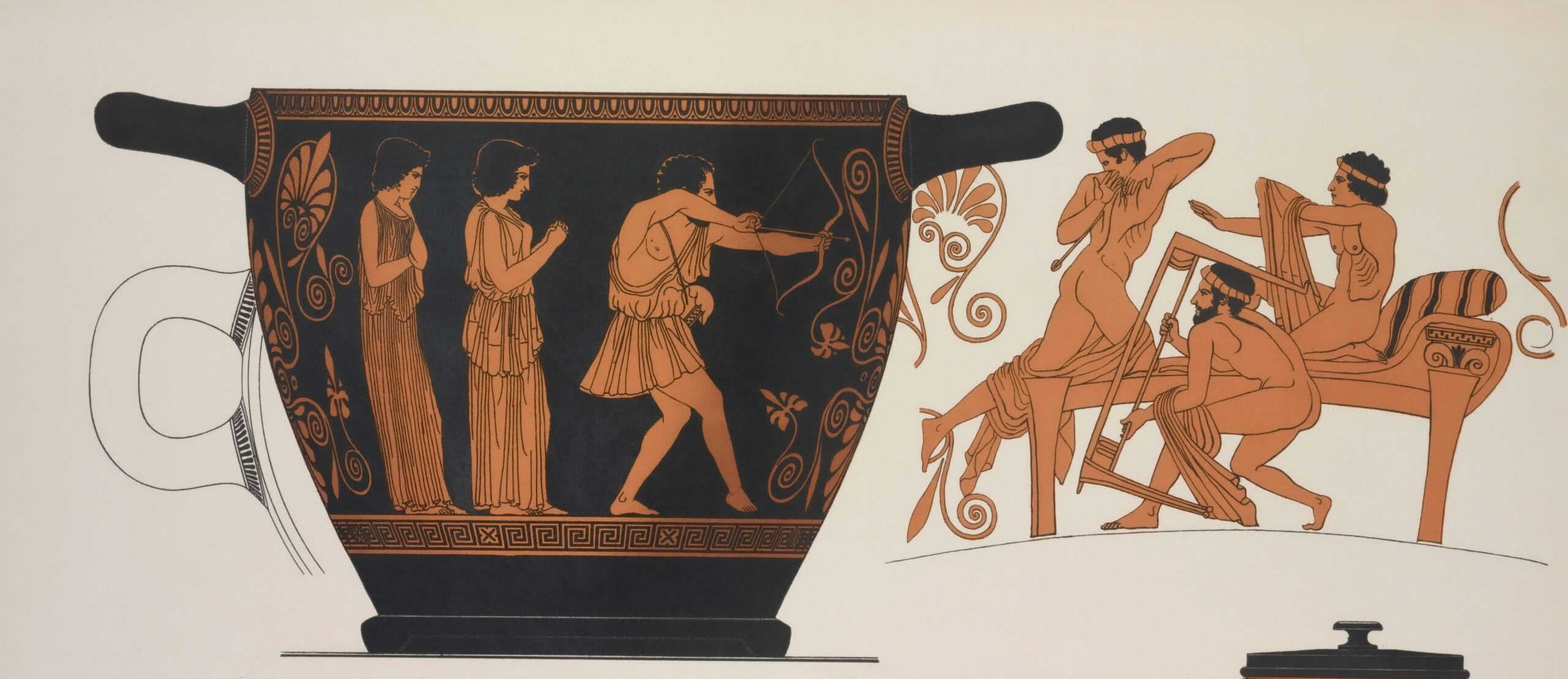
The Iliad’s historical character Odysseus is a prime example of a figure admired for his deceitfulness, cunning, ambition, and strategy. The Trojan war, the hardships of his homecoming, and the loss of all his companions, urged him to develop survival strategies. The war famously ended with his deceitful scheme, the wooden horse, which allowed him and other Greek warriors to unexpectedly attack and slaughter Trojans. After this, he engaged in many more deceitful techniques and violent acts to escape and return to his home. His behaviour is congruent with Dark Triad characteristics, and all the hardship he underwent set the ground for the development of such traits. Inspired by these observations, Welsh and colleagues (in preparation) conducted a qualitative analysis of the Odyssey, exploring Dark Triad themes in the behaviour and personality of Odysseus. As a second coder, I discovered many elements of the Ancient Greek society that are in line with the development of dark characteristics, such as the integral virtue of υστεροφημία (hysterophemia), the eternal honour after a heroic death, and the overall antagonistic, wartime climate of the Homeric society. Moreover, Odysseus is praised by all of his companions, other kings and even the gods, raising him to a pedestal of immortality and godlike features. He still continues on as an admired hero, a person with exceptional intelligence and a master of scheming.
Indeed, many successful and honoured people exhibit Machiavellian traits, which gives them a competitive advantage to survive and thrive in antagonistic societies. This success is admired by the wide majority of people, even interculturally and through different historical periods. It is also observed how such traits favourably develop through extreme circumstances, whether that entails a life-death situation in war, or a critical point in someone’s career in a competitive workplace, endangering their survival, social status, and economic stability. Taken all together, there is some strong evidence that Machiavellianism is not simply an innate, antisocial trait that emerges in extraordinarily “bad” people, but rather an adaptive strategy in an already individualist, person-eating society.
References
- Amir, T. S., & Malik, A. A. (2016). Machiavellianism and counterproductive behaviors at the workplace. Journal of Education & Social Sciences, 4(1), 12–27. https://doi.org/10.20547/jess0411604102
- Gao, K., & Fang, F. (2025). Longitudinal impact of machiavellianism on adolescent prosocial behavior and suicidal risk: the role of hope and loneliness. BMC Psychology, 13(1), 493. https://doi.org/10.1186/s40359-025-02796-9
- Ináncsi, T., Láng, A., & Bereczkei, T. (2016). A darker shade of love: Machiavellianism and positive assortative mating based on romantic ideals. Europe’s Journal of Psychology, 12(1), 137–152. https://doi.org/10.5964/ejop.v12i1.1007
- Jahangir, M., Shah, S. M., Zhou, J. song, Lang, B., & Wang, X. P. (2025). Machiavellianism: Psychological, clinical, and neural correlations. The Journal of Psychology, 159(3), 155–168. https://doi.org/10.1080/00223980.2024.2382243
- Machiavelli, N. (2007). The Prince. Spark. (Original work published 1532)
- Welsh, C.A., Papageorgiou, A., Moore, A., Dempsie, W.A.R., & Papageorgiou, K.A. (in preparation). Odysseus unveiled: The adaptive and maladaptive expression of dark traits in a Homeric hero.
- Wikipedia Contributors. (2019, April 4). Niccolò Machiavelli. Wikipedia; Wikimedia Foundation. https://en.wikipedia.org/wiki/Niccol%C3%B2_Machiavelli
The Italian diplomat, writer, and philosopher Nicolo Machiavelli (1469-1527) explored the deception, treachery, and cunning that one must have to succeed in the political scene. He presents a self-focused approach to human relations, focusing on exploitative power imbalances in his book “The Prince” (Machiavelli, 1532/2007).
Machiavellianism is a personality trait included in the Dark Triad traits, alongside narcissism and psychopathy, describing people that manipulate others to achieve their objectives and maintaining the belief that “ends justify the means” (APA, 2023). Machiavellianism thus has a negative connotation, as it applies to some really bad, spiteful people, people you can’t trust and pose a threat to social harmony. Or, does it?
Machiavelli himself was characterised as the “teacher of evil” by many scholars including Strauss (Wikipedia Contributors, 2019). Individuals in the higher spectrum of Machiavellianism have long been stigmatised by society throughout cultures and historical periods as the “students of evil”. Yet, paradoxically, admired or even worshipped historical and literary figures possess many traits alluding to the dark triad and Machiavellianism in particular.
“As mentioned above, Machiavellianism exhibits a strong societal influence; manipulativeness and cunning are traits favoured in competitive or even abusive environments, such as corporate, but also in most workplaces with a hierarchical structure (Amir et al., 2016). ”
From a personality perspective, people that score high in Machiavellianism scales tend to score low on emotional intelligence and empathy scales, as well as agreeableness (Ináncsi et al, 2016). Seen from a biological perspective, brain imaging studies reveal high anterior dorsolateral prefrontal cortex activity (DLPFC) during Trust games (assessment of Machiavellianism), which reflects constructive decision-making. Machiavellianism has also been linked to moments of ethical transgression, associated with supporting self-centered impulses under unjust circumstances. Finally, societal risk factors for developing Machiavellianism concern early life experiences, including childhood trauma, parental neglect, and dysfunctional attachment styles, mostly avoidant. These dysfunctional relationships suggest discomfort with intimacy and self-reliance (Jahangir et al., 2025)
As mentioned above, Machiavellianism exhibits a strong societal influence; manipulativeness and cunning are traits favoured in competitive or even abusive environments, such as corporate, but also in most workplaces with a hierarchical structure (Amir et al., 2016). Deception in such environments is an advantage towards “survival of the fittest”; the person that better manipulates others to achieve their own goals will get the promotion and the job position; they will make a living and survive. This extends beyond the workplace, as antagonism is a fundamental element of the current capitalistic system in most Western countries. From birth to death, we are instructed to be better than others: to get the better grade, better degree, better career. We are taught to chase our dreams, even under unfair conditions and, in general, do our best to be “the best”. This competition is instilled in us even by the education system, where we compete against each other for scholarships, a place in universities or even in high schools. Even before we become adults, we compete for our right to good education. This competition becomes even more crude in the job market, where poor connections, inability to get a good education, and segregation can cost a person’s survival.
In this society, perhaps being Machiavellian is the smart thing to do; a self-focused, indifferent to morality approach to life is what is generated and propagated by the capitalist system. The person who does it best will survive. That person may have a low socioeconomic status and have strived to survive; they may try to make a better life for themselves through reckless and callous ways. They will then be criticised, or just forgotten. However, they could also be a middle or high social class person that better adapts to competitive environments, such as companies, and ascends the hierarchy through deception and manipulation. And indeed, many Machiavellians do succeed; many well-known leaders and admired figures possess such traits and thrive. Even though society maintains that such people are immoral and a threat to social harmony, it still praises individuals with successful careers making money exploiting others, such as CEOs and billionaires.
“Even though society maintains that such people are immoral and a threat to social harmony, it still praises individuals with successful careers making money exploiting others, such as CEOs and billionaires. ”
The Iliad’s historical character Odysseus is a prime example of a figure admired for his deceitfulness, cunning, ambition, and strategy. The Trojan war, the hardships of his homecoming, and the loss of all his companions, urged him to develop survival strategies. The war famously ended with his deceitful scheme, the wooden horse, which allowed him and other Greek warriors to unexpectedly attack and slaughter Trojans. After this, he engaged in many more deceitful techniques and violent acts to escape and return to his home. His behaviour is congruent with Dark Triad characteristics, and all the hardship he underwent set the ground for the development of such traits. Inspired by these observations, Welsh and colleagues (in preparation) conducted a qualitative analysis of the Odyssey, exploring Dark Triad themes in the behaviour and personality of Odysseus. As a second coder, I discovered many elements of the Ancient Greek society that are in line with the development of dark characteristics, such as the integral virtue of υστεροφημία (hysterophemia), the eternal honour after a heroic death, and the overall antagonistic, wartime climate of the Homeric society. Moreover, Odysseus is praised by all of his companions, other kings and even the gods, raising him to a pedestal of immortality and godlike features. He still continues on as an admired hero, a person with exceptional intelligence and a master of scheming.
Indeed, many successful and honoured people exhibit Machiavellian traits, which gives them a competitive advantage to survive and thrive in antagonistic societies. This success is admired by the wide majority of people, even interculturally and through different historical periods. It is also observed how such traits favourably develop through extreme circumstances, whether that entails a life-death situation in war, or a critical point in someone’s career in a competitive workplace, endangering their survival, social status, and economic stability. Taken all together, there is some strong evidence that Machiavellianism is not simply an innate, antisocial trait that emerges in extraordinarily “bad” people, but rather an adaptive strategy in an already individualist, person-eating society.
References
- Amir, T. S., & Malik, A. A. (2016). Machiavellianism and counterproductive behaviors at the workplace. Journal of Education & Social Sciences, 4(1), 12–27. https://doi.org/10.20547/jess0411604102
- Gao, K., & Fang, F. (2025). Longitudinal impact of machiavellianism on adolescent prosocial behavior and suicidal risk: the role of hope and loneliness. BMC Psychology, 13(1), 493. https://doi.org/10.1186/s40359-025-02796-9
- Ináncsi, T., Láng, A., & Bereczkei, T. (2016). A darker shade of love: Machiavellianism and positive assortative mating based on romantic ideals. Europe’s Journal of Psychology, 12(1), 137–152. https://doi.org/10.5964/ejop.v12i1.1007
- Jahangir, M., Shah, S. M., Zhou, J. song, Lang, B., & Wang, X. P. (2025). Machiavellianism: Psychological, clinical, and neural correlations. The Journal of Psychology, 159(3), 155–168. https://doi.org/10.1080/00223980.2024.2382243
- Machiavelli, N. (2007). The Prince. Spark. (Original work published 1532)
- Welsh, C.A., Papageorgiou, A., Moore, A., Dempsie, W.A.R., & Papageorgiou, K.A. (in preparation). Odysseus unveiled: The adaptive and maladaptive expression of dark traits in a Homeric hero.
- Wikipedia Contributors. (2019, April 4). Niccolò Machiavelli. Wikipedia; Wikimedia Foundation. https://en.wikipedia.org/wiki/Niccol%C3%B2_Machiavelli
