
“Exerting yourself to the fullest within your individual limits : that’s the essence of running, and a metaphor for life – and for me, for writing as well. I believe many runners would agree.’’
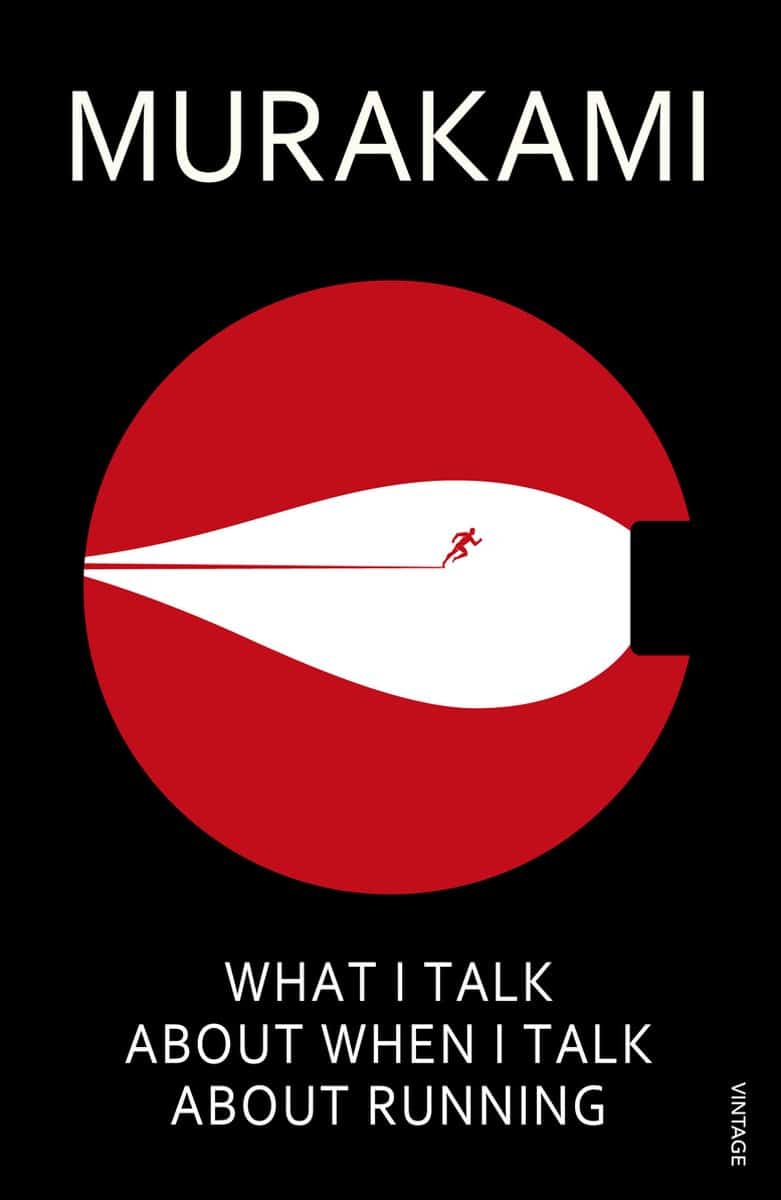
Haruki Murakami is a Japanese novelist, beloved for his fantastic stories blurring the line between dream-life worlds and mundane daily life. However, he has written a number of non-fiction books relating to his various interests, namely jazz, writing, and of course… running. His book What I Talk About When I Talk About Running recounts his early days as a writer and runner and his journey with the sport, and ultimately offers an insight to his life philosophy centered around discipline.
What I Talk About When I Talk About Running is structured as a memoir composed of loosely connected entries rather than a chronological narrative. Murakami moves between accounts of his daily training for marathons and triathlons and memories of his early years as an aspiring writer. The book opens with descriptions of his “serious running” while staying in Hawaii, which are interwoven with reflections on his personality and temperament. He presents himself as fundamentally non-competitive, motivated not by rivalry but by personal goals and self-discipline. Although Murakami has completed a full marathon almost every year for over two decades, he emphasizes that this commitment developed gradually and was mostly shaped by his unusual lifestyle. Murakami describes how his running began at roughly the same time as his writing career, which itself started unexpectedly after a sudden creative impulse while watching a baseball game. As his novels became more successful, running offered him a way to impose routine and stability on an otherwise chaotic and unhealthy creative process. However, over the years and countless races, it grew into something deeper: a mental and physical practice that mirrored the slow, repetitive, and solitary nature of writing itself. In this way, Murakami views running as both a literal activity and a metaphor for creative perseverance.
What stood out to me most while reading is how centrally pain shapes Murakami’s worldview. In an almost masochistic way, he describes the process of writing as excruciating. To write is similar to “manual labor,” requiring intense focus and endurance—the same qualities demanded by long-distance running. He even argues that much of what he knows about writing comes directly from running, since both practices rely on the same form of sustained discipline. While I haven’t written one hundredth of what Murakami has published over the past five decades, I instinctively know what he means. I struggle constantly with starting or finishing artistic projects, even when the desire to create is very much there. Creative endurance is hard. And although I’ve never run a full marathon, I genuinely suspect it might be easier for me to train for one than to finish an entire goddamn novel. In a way, this comparison between running and writing made me feel closer to Murakami, because I recognize the same struggle in myself. I imagine many aspiring artists would feel the same relief in realizing that even a successful author experiences this constant creative struggle.
“Whenever the seasons change, the direction of the wind fluctuates like someone threw a switch. And runners can detect each notch in the seasonal shift in the feel of the wind against our skin, its smell and direction. In the midst of this flow, I’m aware of myself as one tiny piece in the gigantic mosaic of nature. I’m just a replaceable natural phenomenon, like the water in the river that flows under the bridge toward the sea.
I really enjoyed how Murakami described his relationship with aging. Rather than framing it in a self-pitying way, he simply accepts his reality and presents it beautifully. While training for the Boston Marathon in his late fifties, he compares himself to younger runners, noticing the swaying ponytails of young women as a reminder of his own declining vitality – one generation outperforming the older in a race. This mirrors his gradually diminishing performance, despite rigorous training, careful stretching, and disciplined routines. Bodies age, and no amount of effort can entirely prevent physical decline. What I find compelling is not the decline itself, but how he responds to it. He quietly adapts, shifting his focus to triathlons and developing strength in cycling and swimming rather than relying solely on long-distance running. To me, this choice reflects a kind of pragmatic perseverance that feels far more genuine than grand declarations of “never giving up”, which often feel gimmicky. Even the chaotic account of his final triathlon – getting Vaseline on his goggles, struggling through an exhausting run after cycling too hard – reinforces this impression. The ending is messy and slightly undignified, which makes it feel real. The final line, “at least he never walked,” reads less like a heroic slogan and more like a summary of his core belief. It captures the quiet but dominant perseverance that defines both his athletic and creative life.
What I Talk About When I Talk About Running is an enjoyable read for runners and non-runners. It showcases the power of discipline and perseverance, without trying to sell one “correct” way of living or creating. It’s written in an easy-going, honest style and just feels like a collection of life lessons from my favourite Japanese senior citizen.
Available at your local book store or online, starting from €6,99.
“Exerting yourself to the fullest within your individual limits : that’s the essence of running, and a metaphor for life – and for me, for writing as well. I believe many runners would agree.’’
Haruki Murakami is a Japanese novelist, beloved for his fantastic stories blurring the line between dream-life worlds and mundane daily life. However, he has written a number of non-fiction books relating to his various interests, namely jazz, writing, and of course… running. His book What I Talk About When I Talk About Running recounts his early days as a writer and runner and his journey with the sport, and ultimately offers an insight to his life philosophy centered around discipline.
What I Talk About When I Talk About Running is structured as a memoir composed of loosely connected entries rather than a chronological narrative. Murakami moves between accounts of his daily training for marathons and triathlons and memories of his early years as an aspiring writer. The book opens with descriptions of his “serious running” while staying in Hawaii, which are interwoven with reflections on his personality and temperament. He presents himself as fundamentally non-competitive, motivated not by rivalry but by personal goals and self-discipline. Although Murakami has completed a full marathon almost every year for over two decades, he emphasizes that this commitment developed gradually and was mostly shaped by his unusual lifestyle. Murakami describes how his running began at roughly the same time as his writing career, which itself started unexpectedly after a sudden creative impulse while watching a baseball game. As his novels became more successful, running offered him a way to impose routine and stability on an otherwise chaotic and unhealthy creative process. However, over the years and countless races, it grew into something deeper: a mental and physical practice that mirrored the slow, repetitive, and solitary nature of writing itself. In this way, Murakami views running as both a literal activity and a metaphor for creative perseverance.
What stood out to me most while reading is how centrally pain shapes Murakami’s worldview. In an almost masochistic way, he describes the process of writing as excruciating. To write is similar to “manual labor,” requiring intense focus and endurance—the same qualities demanded by long-distance running. He even argues that much of what he knows about writing comes directly from running, since both practices rely on the same form of sustained discipline. While I haven’t written one hundredth of what Murakami has published over the past five decades, I instinctively know what he means. I struggle constantly with starting or finishing artistic projects, even when the desire to create is very much there. Creative endurance is hard. And although I’ve never run a full marathon, I genuinely suspect it might be easier for me to train for one than to finish an entire goddamn novel. In a way, this comparison between running and writing made me feel closer to Murakami, because I recognize the same struggle in myself. I imagine many aspiring artists would feel the same relief in realizing that even a successful author experiences this constant creative struggle.
“Whenever the seasons change, the direction of the wind fluctuates like someone threw a switch. And runners can detect each notch in the seasonal shift in the feel of the wind against our skin, its smell and direction. In the midst of this flow, I’m aware of myself as one tiny piece in the gigantic mosaic of nature. I’m just a replaceable natural phenomenon, like the water in the river that flows under the bridge toward the sea.
I really enjoyed how Murakami described his relationship with aging. Rather than framing it in a self-pitying way, he simply accepts his reality and presents it beautifully. While training for the Boston Marathon in his late fifties, he compares himself to younger runners, noticing the swaying ponytails of young women as a reminder of his own declining vitality – one generation outperforming the older in a race. This mirrors his gradually diminishing performance, despite rigorous training, careful stretching, and disciplined routines. Bodies age, and no amount of effort can entirely prevent physical decline. What I find compelling is not the decline itself, but how he responds to it. He quietly adapts, shifting his focus to triathlons and developing strength in cycling and swimming rather than relying solely on long-distance running. To me, this choice reflects a kind of pragmatic perseverance that feels far more genuine than grand declarations of “never giving up”, which often feel gimmicky. Even the chaotic account of his final triathlon – getting Vaseline on his goggles, struggling through an exhausting run after cycling too hard – reinforces this impression. The ending is messy and slightly undignified, which makes it feel real. The final line, “at least he never walked,” reads less like a heroic slogan and more like a summary of his core belief. It captures the quiet but dominant perseverance that defines both his athletic and creative life.
What I Talk About When I Talk About Running is an enjoyable read for runners and non-runners. It showcases the power of discipline and perseverance, without trying to sell one “correct” way of living or creating. It’s written in an easy-going, honest style and just feels like a collection of life lessons from my favourite Japanese senior citizen.
Available at your local book store or online, starting from €6,99.
