
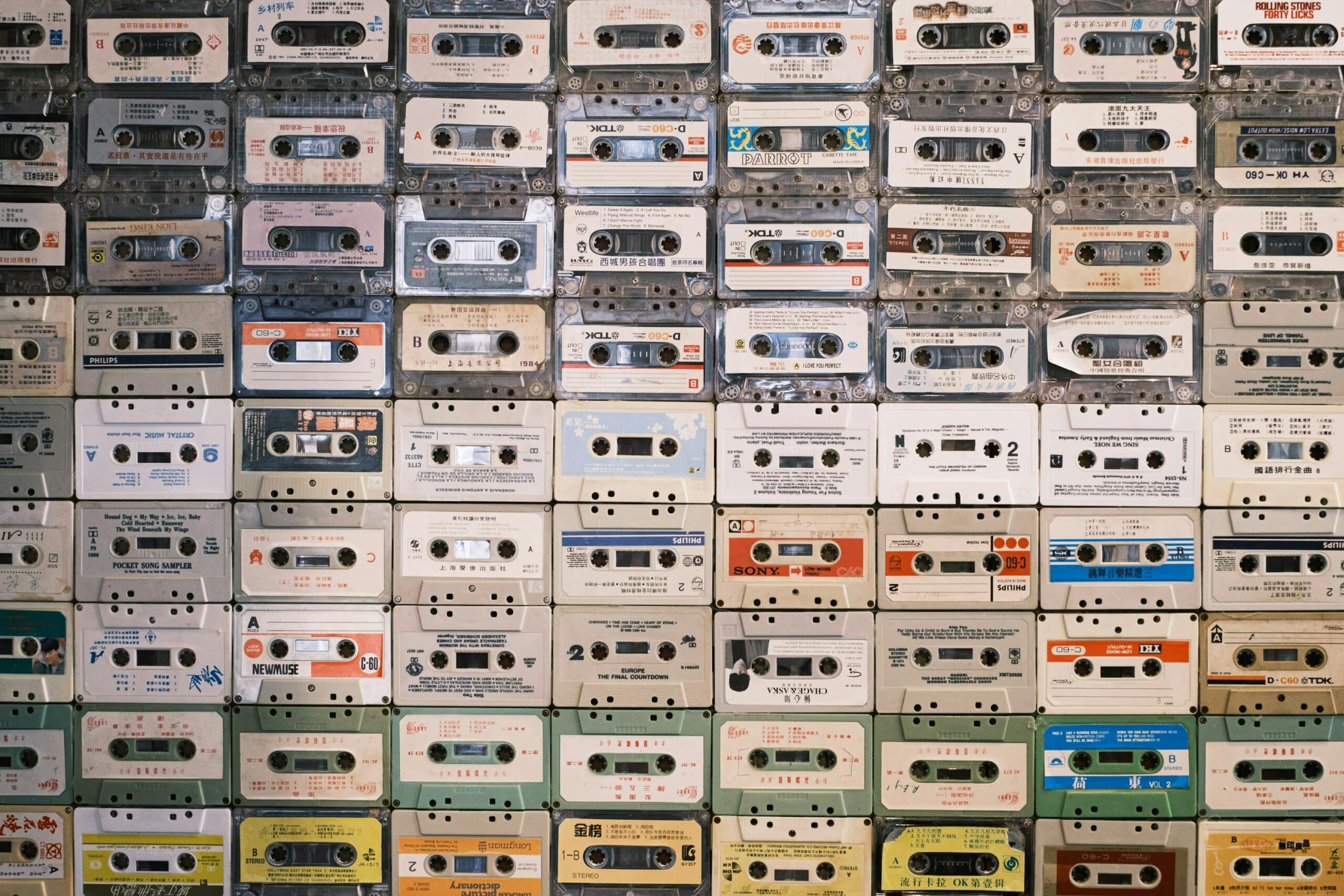
‘Going analog’ has taken the world by storm. Amid the wave of hyper-technologization, attention economies, and profit, profit, profit, some weary people have begun turning to this new movement for solace. But how exactly does this blast from the past help us contextualise our relation to our devices and get back at tech companies in the process?
Photo by Irvin Zheng
The common exhaustion concerning technology and social media is reaching a boiling point. The current turbulence of emotions felt regarding global events is only being bolstered by the dawning realization that our devices are no longer something meant to help us, but rather something meant to control and hinder.
The control we feel we have in shaping our lives profoundly impacts on our mental health. A low sense of personal control can morph into emotional distress and helplessness, and, consequently, indifference towards being able to change anything at all (Sparr & Sonnentag, 2008; Soral et al., 2020; Ross & Mirowsky, 2012). Short-form content, profit-maximising algorithms, and mass paywalling being forced onto virtually every social media app is leading to a universal dissatisfaction and resentment towards the companies making these changes. In fact, a large proportion of young adults (41.7%) regularly use digital detox apps (Schmuck, 2020) or stop using social media apps precisely because of the fatigue and information overload induced by them (Zhang et al., 2016; Chung et al., 2023; Tang et al., 2026; Lehmann & Parker, 2017). The features make users feel like they’re working for the companies, rather than the other way around: AI features cannot be toggled off while ads are incessant and exhausting. So it comes as no surprise that user dissatisfaction leads to disadoption (Lehmann & Parker, 2017). This disadoption, in turn, has become the only viable way to assert control over maladaptive device use.
Infuriation is inflating; what was once a safe haven for distraction from a noisy world has become worse than what we were distracting ourselves from in the first place. Since the pleas for change have been disregarded by tech companies, a new movement has emerged, taking things into the individual’s control: analog media. Analog media’s original definition was media storing content where the physical data input is similar to its output (think film, VHS tapes, vinyl records, etc.) (CLIR, 2017). Now the word has taken on a cultural connotation beyond its earliest meaning. Similar to the word “retro” or “vintage”, analog defines a movement concerned with rejecting the status quo, that is, the current state of digitalization, rather than being aligned with its literal meaning. It’s why analog is used to refer to cassettes, Walkmans, and CDs (Godwin, 2020), but also to the use of digicams, flip phones, and even digital detox tourism (Stäheli & Stoltenberg, 2022). The essence of analogization is not found in specific pieces of media or offline activities; it is, rather, the collective mindset of rejecting hyper-technologization.
“What was once a safe haven for distraction from a noisy world has become worse than what we were distracting ourselves from in the first place.”
At its core, ‘going analog’ is about slowing down and renouncing the chokehold of modern technology. It makes sense then that this trend exploded, because of the allure of its sly rebellion. It presents a small way individuals can break free, even if temporarily, from apps and algorithms designed to swallow up time and energy. This evades capitalistic goals because it intentionally distances itself from digitalization. Speed, efficiency, and easy-access are not only unimportant, but actively disfavoured. The slight struggle and hindrances analog media produces make the act of using it vivid and fulfilling. This goes against everything media companies aim for: hyperconnectivity, overconsumption, and maximum comfort. It instills a certain satisfaction by ‘getting back’ at the companies that are the root cause of this treachery in the first place. Analog contradicts the narrative that tech corporations have spent decades pushing: that technology has been catered after the human ideal for efficiency as opposed to the fact that media has molded our experience of satisfaction. In this way, analog becomes a sort of silent rebellion: a solitary protest that can be done from the comfort of your own home.
Aside from a wider rejection of hyper-technologization, a large part of the appeal of ‘going analog’ is autonomy. Whether done right or not, going analog arises out of the intention to do something about our device use, to feel like we’re in control, as opposed to the other way around. With a world in constant, dizzying transition, analog serves as a static comfort. Precisely because of its obsolete nature, the media and its associations roots itself in a past that cannot be changed. The form our media takes also acutely impacts our relation to it. As McLuhan (1964) put it: “the medium is the message”. By shifting from music streaming to a cassette player, for example, listening to music becomes much more purposeful; it becomes an act of its own rather than something to multitask to. The process of selecting a cassette, inserting, rewinding, and playing it on a device only designed to play cassettes makes one so much more mindful of each song. It’s meditative in the way that it slows down time, in a way music streaming could never emulate. And best of all, choices are not endless, but reduced to what one owns. The physical form creates a deeper focus, which engages various senses without being overwhelming. As one writer put it: “it looks and feels real” (Sax, 2026). This is in contrast to digital media, which is increasingly and artificially overstimulating due to the aim of always having utmost control of the viewer’s attention.
“It’s finally a way that the individual takes precedence over the user, and rejects profit-driven and attention-maximising designs.”
For good reason, this movement has garnered feverish traction, especially among younger people (Sax, 2026). Since most of the younger generations don’t remember a time before digitalization, analog is an embrace of a non-existent nostalgia. It transports the individual to a time before devices were always within reach. This resonates particularly with the youth because they never experienced the groundbreaking technological transition in the first place. Analogization is not a demotion so much as a refuge, because tech is now the norm. This cultural time travel mixes the past and the present, as most people going analog still have to depend on modern technology to function in our society. Because of this, it’s important to draw a nuanced distinction between the analog and the digital. Not everyone will jettison their camera apps just to use their film or digicams, and in fact, most people often use a combination of the two. At the same time, this delicate scale can easily tip onto the wrong side when left unattended. There’s an almost poetic irony of people posting videos showing how they’re ‘going analog’ while using their phone to post it onto TikTok. Although online posts helped connect masses to this movement, the aestheticization of analog, sanitized from its original meaning, serves the exact opposite point it is trying to make. This, paired with the increasing consumerism attached to all things analog, concocts a perfect storm to transform analogization into a repackaged consumerist landscape. This conflation ultimately benefits tech companies more than not having ‘gone analog’ to begin with. Therefore, it’s critical that the focus of analogization is focused on the mindset and intention to disconnect, over the purchase of endless types of analog media. We must be selective with what we use (and know we will use long-term), and favour using what one already has. The most analog act, after all, is the lack of digital usage.
The approach taken to analogization is then the combination of analog and digital in harmonious unity. Analogization can provide the sweet release many of us need from pressing social issues, and, conversely, lead to a mindful use of digital devices and media. It’s finally a way that the individual takes precedence over the user, and rejects profit-driven and attention-maximising designs. Although an ideal balance between analog and digital may not always be possible, the importance is not in perfection, but in intention.
