This reflection on the VSPA Conference is written by a member of the organizing committee. I promise to paint an honest picture 😉
On February 18th, 2026, the theatre hall at CREA became the centre of academic enrichment on the Roeterseiland campus. This year’s theme, ‘Change & Resilience: from Individual to Society’, aimed to connect our rigorous academic environment to the broader societal challenges psychology seeks to address.
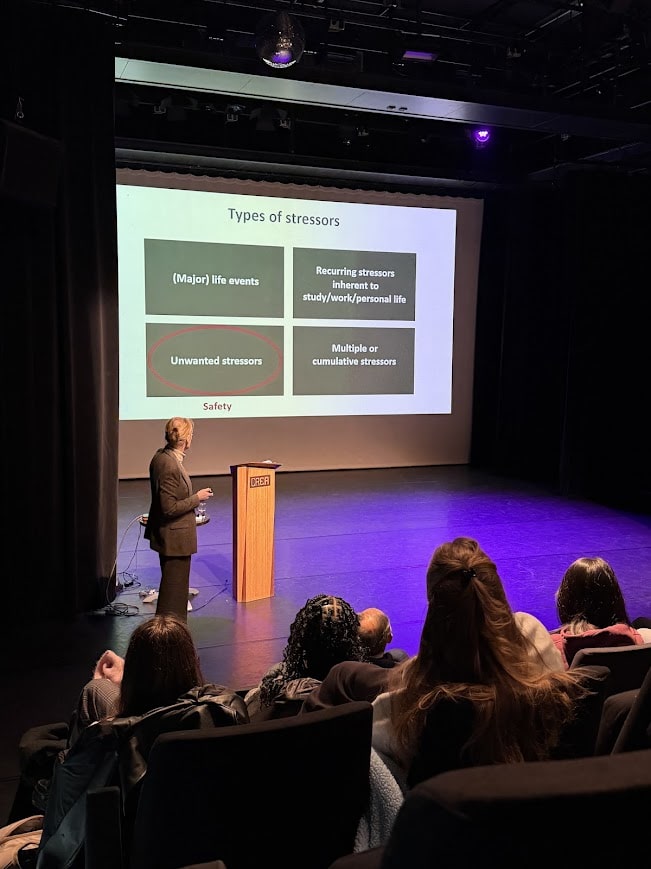
When students and speakers have arrived, Dr. Richta IJntema is introduced. Her lecture provides the attending students with tools on how to think about resilience and challenges the idea of resilience as a trait. Instead, resilience is a dynamic process shaped by the lifecourse, aimed at changing pre-stressor functioning to adapt to stressful situations. Her key message: building resilience is not done alone. True resilience grows in connection with others.
This is a perfect leadup to our second lecture given by Dr. Peter Oeij. As Senior Research Scientist and Consultant at TNO in the field of innovation. He explored the conditions that enable innovation and urged us to reflect on defensive behaviour in teams. Guiding us through the wild land of innovation management and company culture, he stresses the importance of human-centric management to boost resilient operations. This is something we can all start with today: be mindful about team-member interests when making (strategic) choices.
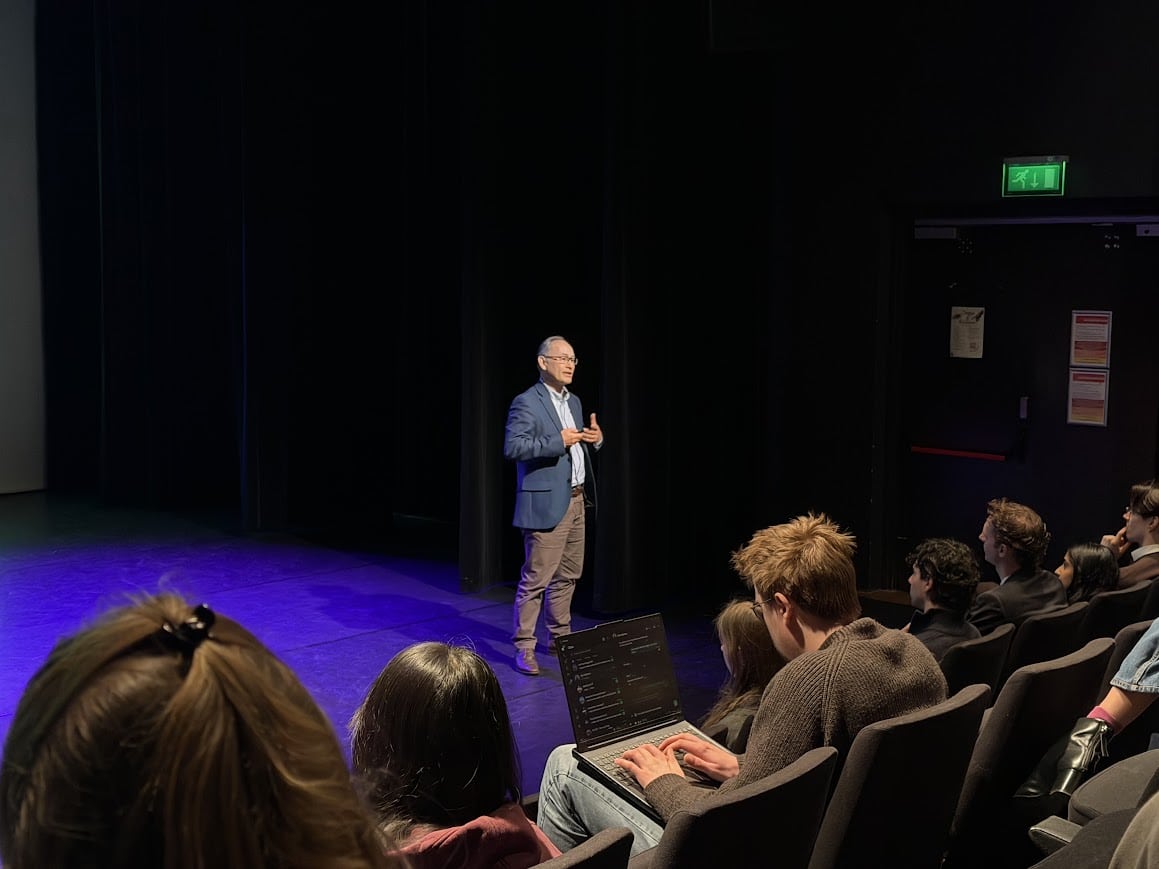
After the break, Hannah Dorsman and Antoinnette Haverhals from the Resilience Centre Leiden delve deep into their research as PhD candidates. Central are their methods for measuring resilience, and how it plays a role in the effects of adversity in childhood on later mental health. Hannah introduced us to early findings on resilience from a study into the ‘children of Kauai’, one of the first studies which identified beneficial factors to building resilience. Using Bronfenbrenners ecological systems model, Hannah & Antoinette continue to walk us through the different kinds of resilience factors on multiple explanatory factors and different corresponding resilience trajectories. Their methods are rigorous and insightful, a golden standard for any research we would like to do ourselves.
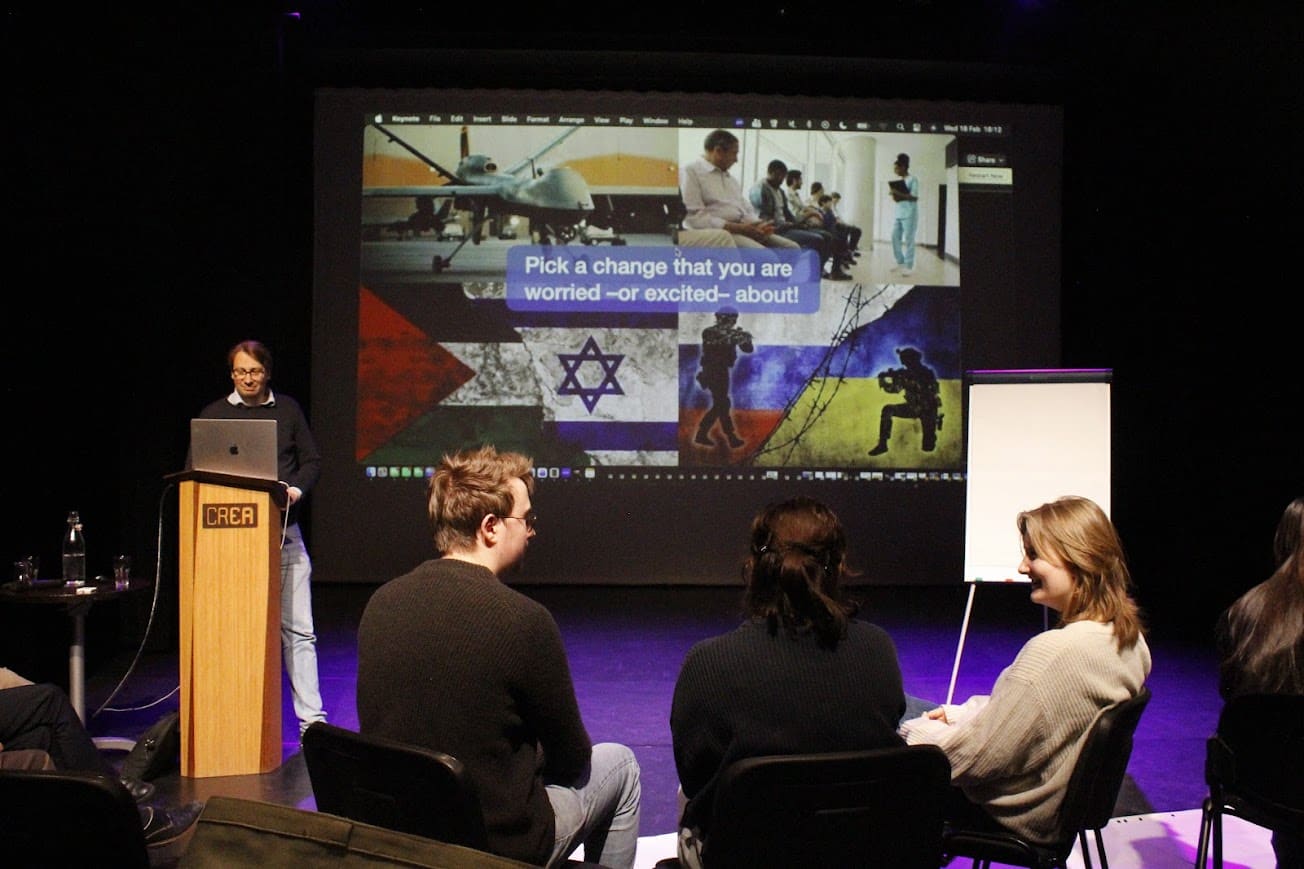
After the lecture, guests can either attend the workshop or join the network borrel. Curious about the workshop, I joined systemic coach Oscar Westra van Holthe. His workshop seeks to bring the theory of the day together and bring it to life in practice. Inspired by his experience in coaching individuals on how to bring about and deal with systemic change, his workshop draws parallels between individual and societal changes. We gather in groups of three and choose one societal change that we feel particularly strong about. Oscar guides us through an analysis of this change by use of his self-developed model of systemic transition. By identifying the different actors active within a system, their respective (power) relationships, and ways in which better and/or different paths of change can be created, we gain new insights into the nature of change, where we can find resilience, and how to identify our own role within these changes.
Meanwhile, the networking borrel is in full swing. Organizations such as AIESEC, Serve the City and TeamCoach Zuidas have engaging conversations with our motivated students looking for potential working opportunities. Given the great atmosphere of CREA café and an open tap provided by the VSPA, the networking borrel was a perfect way to end this intellectually stimulating and insightful day full of impressions. The engaged students and enthusiastic speakers made this a day that I look back on with a warm feeling. It made me happy to see our students engaging with psychology far beyond the classroom and proud to be part of such a motivated group of youngsters.
This reflection on the VSPA Conference is written by a member of the organizing committee. I promise to paint an honest picture 😉
On February 18th, 2026, the theatre hall at CREA became the centre of academic enrichment on the Roeterseiland campus. This year’s theme, ‘Change & Resilience: from Individual to Society’, aimed to connect our rigorous academic environment to the broader societal challenges psychology seeks to address.
When students and speakers have arrived, Dr. Richta IJntema is introduced. Her lecture provides the attending students with tools on how to think about resilience and challenges the idea of resilience as a trait. Instead, resilience is a dynamic process shaped by the lifecourse, aimed at changing pre-stressor functioning to adapt to stressful situations. Her key message: building resilience is not done alone. True resilience grows in connection with others.
This is a perfect leadup to our second lecture given by Dr. Peter Oeij. As Senior Research Scientist and Consultant at TNO in the field of innovation. He explored the conditions that enable innovation and urged us to reflect on defensive behaviour in teams. Guiding us through the wild land of innovation management and company culture, he stresses the importance of human-centric management to boost resilient operations. This is something we can all start with today: be mindful about team-member interests when making (strategic) choices.
After the break, Hannah Dorsman and Antoinnette Haverhals from the Resilience Centre Leiden delve deep into their research as PhD candidates. Central are their methods for measuring resilience, and how it plays a role in the effects of adversity in childhood on later mental health. Hannah introduced us to early findings on resilience from a study into the ‘children of Kauai’, one of the first studies which identified beneficial factors to building resilience. Using Bronfenbrenners ecological systems model, Hannah & Antoinette continue to walk us through the different kinds of resilience factors on multiple explanatory factors and different corresponding resilience trajectories. Their methods are rigorous and insightful, a golden standard for any research we would like to do ourselves.
After the lecture, guests can either attend the workshop or join the network borrel. Curious about the workshop, I joined systemic coach Oscar Westra van Holthe. His workshop seeks to bring the theory of the day together and bring it to life in practice. Inspired by his experience in coaching individuals on how to bring about and deal with systemic change, his workshop draws parallels between individual and societal changes. We gather in groups of three and choose one societal change that we feel particularly strong about. Oscar guides us through an analysis of this change by use of his self-developed model of systemic transition. By identifying the different actors active within a system, their respective (power) relationships, and ways in which better and/or different paths of change can be created, we gain new insights into the nature of change, where we can find resilience, and how to identify our own role within these changes.
Meanwhile, the networking borrel is in full swing. Organizations such as AIESEC, Serve the City and TeamCoach Zuidas have engaging conversations with our motivated students looking for potential working opportunities. Given the great atmosphere of CREA café and an open tap provided by the VSPA, the networking borrel was a perfect way to end this intellectually stimulating and insightful day full of impressions. The engaged students and enthusiastic speakers made this a day that I look back on with a warm feeling. It made me happy to see our students engaging with psychology far beyond the classroom and proud to be part of such a motivated group of youngsters.