As the invasion of Ukraine progresses, and the world looks on in horror, an image forms of the cruel and tyrannical Russian military force. That image is true and must be recognised, along with the catastrophic situation of the Ukrainian people, but what must also be recognised is the humanity of the everyday Russians, whose lives are also torn apart through the increased terror, political indoctrination, and authoritarianism, as Russia devastates another nation.
As the invasion of Ukraine progresses, and the world looks on in horror, an image forms of the cruel and tyrannical Russian military force. That image is true and must be recognised, along with the catastrophic situation of the Ukrainian people, but what must also be recognised is the humanity of the everyday Russians, whose lives are also torn apart through the increased terror, political indoctrination, and authoritarianism, as Russia devastates another nation.
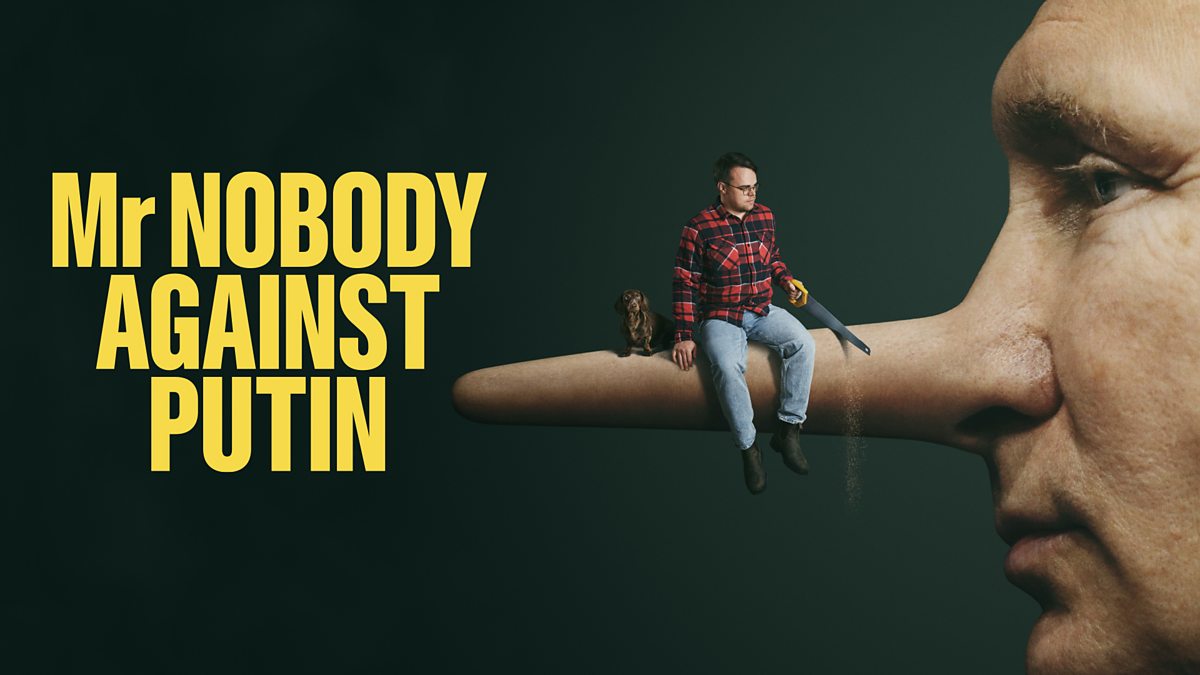
There is one inarguable role that all documentary films have, and that is to present reality, or at least the piece of reality the creators have decided to focus on. Pavel “Pasha” Talankin’s and David Borenstein’s Mr Nobody against Putin fulfils that role exceptionally well, as it leads the audience through the militarisation and propagandising of a rural Russian primary school. This documentary film was shot starting in 2022, following the Russian invasion of Ukraine, and portrays its effects on the citizens of Karabash and students in the town who were thrust into war and political indoctrination. It primarily focuses on the insidious manner in which this propaganda is spread, unnoticeable to children or to people who are not attuned to criticism of the government. Pasha shows the effects of indoctrination through the school, attitudes around town, and through displays of national pride amplified by fear of speaking out against the government. He also struggles with his own thoughts and feelings; he means to uphold openness and active criticism of the war, yet feels afraid of stepping out of his grey and neutral role, all while being dragged into the propaganda. As the school videographer and event planner, he has to coordinate assemblies used to spread propaganda and film them as proof of the school’s unwavering support for Russia. In these moments, Pasha feels like he is giving into the system. He feels guilty for what he is contributing to, showing the audience the effects of the propaganda on him as an individual. Never would the government have predicted how this enforced surveillance would backfire on them when Pasha used that same footage to show a global audience how the Russian people are being indoctrinated.
Pasha is directly immersed in the reality he’s showing, as he goes about his regular life and work. What the audience gets to see in the 2025 debut is the brave choice taken by a man with a unique opportunity, but also one facing many challenges in the making of his film. His life as a school videographer is paired with the narration about the sociopolitical situation. In the narration, he explains the secret direction of his filming, which is to expose the manipulation used in schools to facilitate pro-war attitudes. Pasha has to deal with dilemmas that intertwine his personal relationships and filming the documentary. He has responsibilities as a teacher and as a Russian citizen, which contrast with the moral obligations to the journalism he is conducting.
“Never would the government have predicted how this enforced surveillance would backfire on them”
Pasha’s role at the school, outside of filmography or pedagogy, is as an isle of comfort and safety. Students can come to his office to have a cookie and some tea, to have a chat about life, or to just exist. We see them sharing many joyful moments with him and with each other at the start of the film, collaborating on projects, making jokes. Later in the film, that carefreeness is lost to anxiety, and an empty pit grows in what once was the beating heart of the school. He films small expressions shared by the children, showing their unease. With family members sent out to the front and with learning disrupted by propaganda doctrine and nationalistic assemblies, students are worn out, worried, tired, and scared to even associate with someone who is trying to show his opposition to the government and its implementations in the school. He also recognises why they may feel unsafe associating with him, though it does not help his already beaten-down morale.
There are hints in the film about Pasha being “different,” through comments from his mother, or the way he’s approached by other staff. We also see that the students seen in his office often have alternative, rebellious styles or accessories, and indulge in quirky or nerdy interests. (Pan Nikt Kontra Putin, 2025) A room with no judgment, where everyone can find space and comfort, is replaced with fear and terror, showing the effectiveness of propaganda at destabilising and stripping humanity.
Many gut-wrenching scenes focus more directly on the costs of war, rather than on the subtleties of indoctrination. The farewell parties for school alumni who have been drafted are sorrowful. We brew in the moments shared between young boys, who are saying goodbye to their closest peers, knowing that they are being sent off to great danger, and knowing that their own fate may soon be similar. Pasha captures these boys being extremely vulnerable, to the extent that could be cause for ridicule from other men if not for the dire, universally understood situation they are in. He explains his own connection to them, as he has seen them growing up and learning, rooted for their futures and ultimately has to send them off to what could be their demise. One of, if not the most powerful scene in the film happens when Pasha attends the funeral of one of these soldier boys. Out of respect for his family, Talankin does not film the ceremony. Instead, we just hear the agonising cries of the boy’s mother over a black screen, who recognises how unfair and unjust her son’s fate was. His death highlights the personal, most familiar, and most direct cost of war, and in her mourning, the audience hears just how excruciating it is to lose a loved one to a fight he was forced into and for a cause so vile.
“His documenting is an almost accidental, tragic, and deeply powerful passion project, which sends an empathetic message about the real lives of the Russian people”
Something particularly powerful about this film is how authentically immersive it is. The cold, grey, polluted city of Karabash is depicted with genuine warmth and love, as seen through intimate shots of lights in concrete-block windows, and through the light-hearted interactions that Pasha has with the students in school corridors and in his cosy office. The amateur nature of Talankin’s film comes across not in the quality, which is high without question, but through the connection he has to the place, the people, and the cause he is covering. Talankin had no previous experience with feature film production or documentary filmmaking. His job perfectly lends itself to collecting direct depictions of the dishonesty and manipulation of the Russian government and he identifies the trajectory of it early, allowing him to make this film. He had technical knowledge of camera equipment, but his documenting is an almost accidental, tragic, and deeply powerful passion project, which sends an empathetic message about the real lives of the Russian people, entirely overshadowed by the terror and totalitarianism of the Russian government.
The psychological deterioration of Karabash, the primary school, and Talankin as an individual all piece together into the depiction of the consequences of governmental oppression, laid out over 2 years of gradual change. Some people lose faith, some lose loved ones, and our narrator loses the life he was once living to escape that tragedy. We watch as the water boils over, and Pavel Talankin is the only one who manages to jump out of it.
References
– Brody, R. (2026, January 23). Challenging Official Histories in “Natchez” and “Mr. Nobody Against Putin.” The New Yorker. https://www.newyorker.com/magazine/2026/02/02/natchez-movie-review-mr-nobody-against-putin
- Novaya Gazeta Europe. (2025, July 6). Class act. Novaya Gazeta Europe. https://novayagazeta.eu/articles/2025/07/06/class-act-en
– Novaya Gazeta Europe. (2026, January 23). Russian film Mr Nobody Against Putin nominated for Best Documentary Oscar. Novaya Gazeta Europe. https://novayagazeta.eu/articles/2026/01/23/russian-film-mr-nobody-against-putin-nominated-for-best-documentary-oscar-en-news
- Pan Nikt kontra Putin. (2025). Mdag.pl. https://archiwum2025.mdag.pl/pl/ogladaj-online/22/film/pan-nikt-kontra-putin
There is one inarguable role that all documentary films have, and that is to present reality, or at least the piece of reality the creators have decided to focus on. Pavel “Pasha” Talankin’s and David Borenstein’s Mr Nobody against Putin fulfils that role exceptionally well, as it leads the audience through the militarisation and propagandising of a rural Russian primary school. This documentary film was shot starting in 2022, following the Russian invasion of Ukraine, and portrays its effects on the citizens of Karabash and students in the town who were thrust into war and political indoctrination. It primarily focuses on the insidious manner in which this propaganda is spread, unnoticeable to children or to people who are not attuned to criticism of the government. Pasha shows the effects of indoctrination through the school, attitudes around town, and through displays of national pride amplified by fear of speaking out against the government. He also struggles with his own thoughts and feelings; he means to uphold openness and active criticism of the war, yet feels afraid of stepping out of his grey and neutral role, all while being dragged into the propaganda. As the school videographer and event planner, he has to coordinate assemblies used to spread propaganda and film them as proof of the school’s unwavering support for Russia. In these moments, Pasha feels like he is giving into the system. He feels guilty for what he is contributing to, showing the audience the effects of the propaganda on him as an individual. Never would the government have predicted how this enforced surveillance would backfire on them when Pasha used that same footage to show a global audience how the Russian people are being indoctrinated.
Pasha is directly immersed in the reality he’s showing, as he goes about his regular life and work. What the audience gets to see in the 2025 debut is the brave choice taken by a man with a unique opportunity, but also one facing many challenges in the making of his film. His life as a school videographer is paired with the narration about the sociopolitical situation. In the narration, he explains the secret direction of his filming, which is to expose the manipulation used in schools to facilitate pro-war attitudes. Pasha has to deal with dilemmas that intertwine his personal relationships and filming the documentary. He has responsibilities as a teacher and as a Russian citizen, which contrast with the moral obligations to the journalism he is conducting.
“Never would the government have predicted how this enforced surveillance would backfire on them”
Pasha’s role at the school, outside of filmography or pedagogy, is as an isle of comfort and safety. Students can come to his office to have a cookie and some tea, to have a chat about life, or to just exist. We see them sharing many joyful moments with him and with each other at the start of the film, collaborating on projects, making jokes. Later in the film, that carefreeness is lost to anxiety, and an empty pit grows in what once was the beating heart of the school. He films small expressions shared by the children, showing their unease. With family members sent out to the front and with learning disrupted by propaganda doctrine and nationalistic assemblies, students are worn out, worried, tired, and scared to even associate with someone who is trying to show his opposition to the government and its implementations in the school. He also recognises why they may feel unsafe associating with him, though it does not help his already beaten-down morale.
There are hints in the film about Pasha being “different,” through comments from his mother, or the way he’s approached by other staff. We also see that the students seen in his office often have alternative, rebellious styles or accessories, and indulge in quirky or nerdy interests. (Pan Nikt Kontra Putin, 2025) A room with no judgment, where everyone can find space and comfort, is replaced with fear and terror, showing the effectiveness of propaganda at destabilising and stripping humanity.
Many gut-wrenching scenes focus more directly on the costs of war, rather than on the subtleties of indoctrination. The farewell parties for school alumni who have been drafted are sorrowful. We brew in the moments shared between young boys, who are saying goodbye to their closest peers, knowing that they are being sent off to great danger, and knowing that their own fate may soon be similar. Pasha captures these boys being extremely vulnerable, to the extent that could be cause for ridicule from other men if not for the dire, universally understood situation they are in. He explains his own connection to them, as he has seen them growing up and learning, rooted for their futures and ultimately has to send them off to what could be their demise. One of, if not the most powerful scene in the film happens when Pasha attends the funeral of one of these soldier boys. Out of respect for his family, Talankin does not film the ceremony. Instead, we just hear the agonising cries of the boy’s mother over a black screen, who recognises how unfair and unjust her son’s fate was. His death highlights the personal, most familiar, and most direct cost of war, and in her mourning, the audience hears just how excruciating it is to lose a loved one to a fight he was forced into and for a cause so vile.
“His documenting is an almost accidental, tragic, and deeply powerful passion project, which sends an empathetic message about the real lives of the Russian people”
Something particularly powerful about this film is how authentically immersive it is. The cold, grey, polluted city of Karabash is depicted with genuine warmth and love, as seen through intimate shots of lights in concrete-block windows, and through the light-hearted interactions that Pasha has with the students in school corridors and in his cosy office. The amateur nature of Talankin’s film comes across not in the quality, which is high without question, but through the connection he has to the place, the people, and the cause he is covering. Talankin had no previous experience with feature film production or documentary filmmaking. His job perfectly lends itself to collecting direct depictions of the dishonesty and manipulation of the Russian government and he identifies the trajectory of it early, allowing him to make this film. He had technical knowledge of camera equipment, but his documenting is an almost accidental, tragic, and deeply powerful passion project, which sends an empathetic message about the real lives of the Russian people, entirely overshadowed by the terror and totalitarianism of the Russian government.
The psychological deterioration of Karabash, the primary school, and Talankin as an individual all piece together into the depiction of the consequences of governmental oppression, laid out over 2 years of gradual change. Some people lose faith, some lose loved ones, and our narrator loses the life he was once living to escape that tragedy. We watch as the water boils over, and Pavel Talankin is the only one who manages to jump out of it.