Why have endurance sports moved from an elite pursuit to a mainstream activity?
Why have endurance sports moved from an elite pursuit to a mainstream activity?
Photo by Markus Spiske
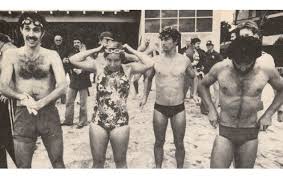
Photo by Markus Spiske
Not long ago, feats of extreme endurance belonged to a small and almost mythical group of athletes: ultramarathon runners, Ironman triathletes, polar explorers, and mountaineers. Today, however, endurance sports have moved from the margins to the mainstream. You probably can find one of these athletes in your class, your friend group, or within a couple of scrolls on social media. Five years ago, this was unimaginable, but what has changed since then? Why has pushing limits become a modern obsession?
Marathon registrations are now comparable to concert ticket battles, which often sell out within hours; ultradistance races multiply each year, and events once considered extraordinary, such as completing an Ironman, are increasingly viewed as ambitious yet attainable goals for ordinary people. This transformation reflects more than a generational shift in fitness trends. It reveals deeper psychological, cultural, and social changes in how modern individuals seek meaning, a sense of identity, and foster resilience.
Few events symbolize the endurance movement more clearly than the Ironman triathlon. Consisting of a 3.8-kilometer swim, a 180-kilometer bike ride, and a full marathon run completed in a single day, the race began in 1978 as a challenge among a small group of athletes in Hawaii. What started as a friendly debate over who was the fittest swimmer, cyclist, and runner soon evolved into one of the world’s most demanding sporting events. Today, Ironman races take place across the globe, attracting hundreds of thousands of participants who attempt the distance not necessarily to win, but to finish (IRONMAN, 2025). Running a marathon, once a rare accomplishment, has become a common milestone. The focus is less on speed or ranking and more on persistence and discipline. Victory is finishing, framed as doable, provided one is willing to commit, which is the true achievement. But this shift from elite competition to personal challenge mirrors a broader transformation in endurance sports.
“The endurance culture underscores that the winner is not always the fastest athlete, but often the one who refuses to quit.”
The rising popularity of endurance sports reflects a generational shift in how success and achievement are understood and where it comes from. In an era defined by instant gratification and rapid rewards, endurance represents the opposite: patience, consistency, and long-term commitment. Success in endurance sports cannot be rushed. It is built gradually through countless hours of training, overcoming setbacks, and mostly boring repetition. This mindset resonates strongly with modern ideas about self-improvement, where individuals measure success not only by outcomes but by effort, and resilience. Success is not about falling the least amount of times, but about getting up after every fall. These qualities can also be showcased in other areas of life, such as academic achievement, work, or the honing of a skill. The emphasis is on showing up day after day, developing discipline, and discovering one’s limits.
The endurance culture underscores that the winner is not always the fastest athlete, but often the one who refuses to quit. The challenge becomes deeply personal, less about outperforming others and more about confronting oneself. At the heart of endurance sports lies a powerful psychological appeal: extreme challenges provide a rare sense of clarity in a complex world, a clarity to see yourself as who you really are. Whether you can stand by your word. Whether you can overcome daily hardships with no short-term reward. Long hours of running, cycling, or swimming strip away distractions and force athletes to engage with discomfort, doubt, and fatigue. Many participants describe endurance events as journeys of self-discovery rather than purely athletic contests. Nonetheless, endurance sports also offer something increasingly scarce in modern life: tangible proof of progress. Training plans are measurable. Distances increase, times improve, and milestones are reached through effort rather than luck or innate talent. For many, this sense of control and visible growth in a challenging situation is deeply motivating at a personal level. According to Self-Determination Theory (Ryan & Deci, 2000), these feelings are fundamental drivers of motivation in sport, as athletes tend to thrive when they feel competent, autonomous, and in control (Almagro et al., 2020). Moreover, scholars have noted that voluntarily overcoming difficulty can strengthen self-belief and resilience (Henderson, 2024). The experience becomes material, and if one can push through exhaustion and doubt, other challenges may feel more manageable.
As endurance sports have grown more common, many athletes seek ever-greater challenges. Ultramarathons (races longer than a 42.2-kilometer marathon) have surged dramatically in popularity. What once seemed extreme now represents the new frontier. Endurance sports provide a clear and compelling new cultural narrative: ordinary individuals attempting extraordinary feats. Once you have achieved a goal, there is always a harder one waiting, so the journey never truly ends. It becomes a way of life rather than a temporary lesson, creating a story of perseverance in a world hungry for authenticity.
Despite their individual nature, endurance sports foster powerful communities (WSG, 2025). Joining a run club or a community is the new social paradigm of young adults, a sphere to meet like-minded people and an alternative to the long, lonely hours spent on training. They become a source of structure, motivation, and identity. Shared suffering creates bonds. Encouraging each other rather than competing contrasts with traditional competitive sports, where winning often defines success. Many athletes return to events for camaraderie, the sense of belonging to a group that understands the demands of long training hours, physical pain, and emotional highs and lows.
“Endurance sports provide a clear and compelling new cultural narrative: ordinary individuals attempting extraordinary feats.”
Paradoxically, as endurance challenges have grown more extreme, they have also become more accessible. Advances in sports science, nutrition, and coaching have made it easier for non-elite athletes to train effectively (Dassonville, 2025). Information once reserved for professionals such as training plans, recovery strategies, and fueling techniques is widely available online. As a result, endurance sports are no longer perceived as reserved for extraordinary individuals. Many participants have a 9 to 5 job, families and a social life that have to balance with the training, which used to be a full-time duty itself. The growing diversity of participants, including more women and non-professional athletes, has further expanded the culture, reinforcing the idea that endurance is attainable.
Conversely, media and social platforms have played a crucial role in the spread of endurance culture. Stories of everyday people completing Ironman races, ultramarathons, or multi-day adventures circulate widely, inspiring others to imagine themselves doing the same. Visibility makes the extraordinary feel possible (WSG, 2025). Social media also reinforces identity. Posting training milestones, race photos, and finish-line moments transforms endurance achievements into shared experiences (Dassonville, 2025). It’s one thing to watch distant, seemingly unrelatable people accomplish extraordinary challenges on TV; it’s another to see people in your age group on your Instagram feed also juggling intense training with studies, full-time work, and a social life. That visibility makes the goal feel more attainable and challenges the self-imposed belief that there isn’t enough time to pursue such an achievement. Over time, it becomes part of a shared social identity.
Not everyone needs to complete an Ironman or run an ultramarathon to experience this mindset. For some, a 5-kilometer run or a local cycling challenge provides the same sense of progress and meaning. What matters is the journey toward personal growth (Henderson, 2024). In a world defined by immediacy, endurance invites patience. In a culture often focused on comfort, it embraces discomfort. And in lives that can feel fragmented and fast-paced, endurance provides a rare sense of purpose, one step, one stroke, one kilometer at a time.
References
– Almagro, B. J., Sáenz-López, P., Fierro-Suero, S., & Conde, C. (2020). Perceived Performance, Intrinsic Motivation and Adherence in Athletes. International journal of environmental research and public health, 17(24), 9441. https://doi.org/10.3390/ijerph17249441
– Dassonville, C. (2025, October 26). I recently came across a LinkedIn post about a runner who completed a “Backyard Ultra”, an ultramarathon race where you run a 4.167-mile loop every hour until only one person remains. Linkedin.com. https://www.linkedin.com/pulse/rise-ultra-endurance-why-more-people-going-beyond-dassonville-dt05c/
– Henderson, J. (2024, March 22). Move over, marathons: the ultra-endurance sports that are redefining fitness. The Guardian. https://www.theguardian.com/lifeandstyle/2024/mar/22/ultra-endurance-sports-long-distance-running-skiing-swimming
– IRONMAN. (2025). History. IRONMAN. https://www.ironman.com/about/history
– Ryan, R. M., & Deci, E. L. (2000). Self-determination Theory and the Facilitation of Intrinsic Motivation, Social Development, and Well-being. American Psychologist, 55(1), 68–78. https://doi.org/10.1037/0003-066X.55.1.68
– WSG. (2025, December 30). World’s Sports Group. World’s Sports Group. https://www.worldssportsgroup.com/blog/Blog%20Post%20Title%20One-3zaa9-zlxng-xbkmm-m7xld?utm_
– XTERRA Fitness. (2024, January 29). The History and Evolution of the Ironman Triathlon. XTERRA Fitness. https://www.xterrafitness.com/blog/the-history-and-evolution-of-the-ironman-triathlon/?srsltid=AfmBOoqNMLtN_gQ7ZY-0NJ2m_cDlLVZia7AOSRBsTb3UjbzcfZegZDkP
Not long ago, feats of extreme endurance belonged to a small and almost mythical group of athletes: ultramarathon runners, Ironman triathletes, polar explorers, and mountaineers. Today, however, endurance sports have moved from the margins to the mainstream. You probably can find one of these athletes in your class, your friend group, or within a couple of scrolls on social media. Five years ago, this was unimaginable, but what has changed since then? Why has pushing limits become a modern obsession?
Marathon registrations are now comparable to concert ticket battles, which often sell out within hours; ultradistance races multiply each year, and events once considered extraordinary, such as completing an Ironman, are increasingly viewed as ambitious yet attainable goals for ordinary people. This transformation reflects more than a generational shift in fitness trends. It reveals deeper psychological, cultural, and social changes in how modern individuals seek meaning, a sense of identity, and foster resilience.
Few events symbolize the endurance movement more clearly than the Ironman triathlon. Consisting of a 3.8-kilometer swim, a 180-kilometer bike ride, and a full marathon run completed in a single day, the race began in 1978 as a challenge among a small group of athletes in Hawaii. What started as a friendly debate over who was the fittest swimmer, cyclist, and runner soon evolved into one of the world’s most demanding sporting events. Today, Ironman races take place across the globe, attracting hundreds of thousands of participants who attempt the distance not necessarily to win, but to finish (IRONMAN, 2025). Running a marathon, once a rare accomplishment, has become a common milestone. The focus is less on speed or ranking and more on persistence and discipline. Victory is finishing, framed as doable, provided one is willing to commit, which is the true achievement. But this shift from elite competition to personal challenge mirrors a broader transformation in endurance sports.
“The endurance culture underscores that the winner is not always the fastest athlete, but often the one who refuses to quit.”
The rising popularity of endurance sports reflects a generational shift in how success and achievement are understood and where it comes from. In an era defined by instant gratification and rapid rewards, endurance represents the opposite: patience, consistency, and long-term commitment. Success in endurance sports cannot be rushed. It is built gradually through countless hours of training, overcoming setbacks, and mostly boring repetition. This mindset resonates strongly with modern ideas about self-improvement, where individuals measure success not only by outcomes but by effort, and resilience. Success is not about falling the least amount of times, but about getting up after every fall. These qualities can also be showcased in other areas of life, such as academic achievement, work, or the honing of a skill. The emphasis is on showing up day after day, developing discipline, and discovering one’s limits.
The endurance culture underscores that the winner is not always the fastest athlete, but often the one who refuses to quit. The challenge becomes deeply personal, less about outperforming others and more about confronting oneself. At the heart of endurance sports lies a powerful psychological appeal: extreme challenges provide a rare sense of clarity in a complex world, a clarity to see yourself as who you really are. Whether you can stand by your word. Whether you can overcome daily hardships with no short-term reward. Long hours of running, cycling, or swimming strip away distractions and force athletes to engage with discomfort, doubt, and fatigue. Many participants describe endurance events as journeys of self-discovery rather than purely athletic contests. Nonetheless, endurance sports also offer something increasingly scarce in modern life: tangible proof of progress. Training plans are measurable. Distances increase, times improve, and milestones are reached through effort rather than luck or innate talent. For many, this sense of control and visible growth in a challenging situation is deeply motivating at a personal level. According to Self-Determination Theory (Ryan & Deci, 2000), these feelings are fundamental drivers of motivation in sport, as athletes tend to thrive when they feel competent, autonomous, and in control (Almagro et al., 2020). Moreover, scholars have noted that voluntarily overcoming difficulty can strengthen self-belief and resilience (Henderson, 2024). The experience becomes material, and if one can push through exhaustion and doubt, other challenges may feel more manageable.
As endurance sports have grown more common, many athletes seek ever-greater challenges. Ultramarathons (races longer than a 42.2-kilometer marathon) have surged dramatically in popularity. What once seemed extreme now represents the new frontier. Endurance sports provide a clear and compelling new cultural narrative: ordinary individuals attempting extraordinary feats. Once you have achieved a goal, there is always a harder one waiting, so the journey never truly ends. It becomes a way of life rather than a temporary lesson, creating a story of perseverance in a world hungry for authenticity.
Despite their individual nature, endurance sports foster powerful communities (WSG, 2025). Joining a run club or a community is the new social paradigm of young adults, a sphere to meet like-minded people and an alternative to the long, lonely hours spent on training. They become a source of structure, motivation, and identity. Shared suffering creates bonds. Encouraging each other rather than competing contrasts with traditional competitive sports, where winning often defines success. Many athletes return to events for camaraderie, the sense of belonging to a group that understands the demands of long training hours, physical pain, and emotional highs and lows.
“Endurance sports provide a clear and compelling new cultural narrative: ordinary individuals attempting extraordinary feats.”
Paradoxically, as endurance challenges have grown more extreme, they have also become more accessible. Advances in sports science, nutrition, and coaching have made it easier for non-elite athletes to train effectively (Dassonville, 2025). Information once reserved for professionals such as training plans, recovery strategies, and fueling techniques is widely available online. As a result, endurance sports are no longer perceived as reserved for extraordinary individuals. Many participants have a 9 to 5 job, families and a social life that have to balance with the training, which used to be a full-time duty itself. The growing diversity of participants, including more women and non-professional athletes, has further expanded the culture, reinforcing the idea that endurance is attainable.
Conversely, media and social platforms have played a crucial role in the spread of endurance culture. Stories of everyday people completing Ironman races, ultramarathons, or multi-day adventures circulate widely, inspiring others to imagine themselves doing the same. Visibility makes the extraordinary feel possible (WSG, 2025). Social media also reinforces identity. Posting training milestones, race photos, and finish-line moments transforms endurance achievements into shared experiences (Dassonville, 2025). It’s one thing to watch distant, seemingly unrelatable people accomplish extraordinary challenges on TV; it’s another to see people in your age group on your Instagram feed also juggling intense training with studies, full-time work, and a social life. That visibility makes the goal feel more attainable and challenges the self-imposed belief that there isn’t enough time to pursue such an achievement. Over time, it becomes part of a shared social identity.
Not everyone needs to complete an Ironman or run an ultramarathon to experience this mindset. For some, a 5-kilometer run or a local cycling challenge provides the same sense of progress and meaning. What matters is the journey toward personal growth (Henderson, 2024). In a world defined by immediacy, endurance invites patience. In a culture often focused on comfort, it embraces discomfort. And in lives that can feel fragmented and fast-paced, endurance provides a rare sense of purpose, one step, one stroke, one kilometer at a time.