
“And by the time I have figured out what it’s worth…”
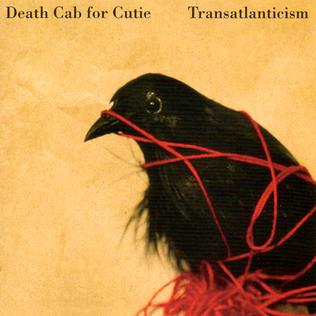
On my twenty-second birthday, I decided to get creative with celebration ideas and spend my day learning about other things that were also turning twenty-two. Among the things I discovered were the 2003 romcom Love Actually playing at a local theatre, Tallulah the white-cheeked gibbon for whom the Memphis Zoo authorities threw a Taylor Swift-themed party, and American rock band Deathcab For Cutie’s breakthrough album Transatlanticism.
British-American political ties aside, Deathcab’s lead vocalist Ben Gibbard used the term “transatlanticism” to refer to the immeasurable space separating two lovers in a long-distance relationship. But a handful of Spotify replays later, one realises that this is only a loose thematic thread tying together all eleven songs on the album: many times mid-listen you wonder if the songs are about loving someone across the Atlantic, or loving yourself across time. Apparently, existential feelings like these are a staple birthday component—bonus points if you’re turning twenty-something—so my experience may be biased. The New Year opens with “So this is the new year / and I don’t feel any different”, accompanied by a clanking of bass and drums that sounded like the shocking realisation that growing older in adult years doesn’t make you feel like any less of a kid. It also carries with it the all-too-familiar wish of wanting to return to happier, simpler times: “I wish the world was flat like the old days / then I could travel just by folding a map”…a jolly preparation for the nostalgic train ride that is to follow.
A sound can sometimes have you chasing a feeling attached to an oddly specific memory, one that’s fuzzy, only half-remembered. No matter how long you spend trying to recollect it, brushing away the dust of time and newer experiences, it remains stubbornly out of reach. But the feeling stays, clear as ever, as if you felt it only yesterday. Such sounds are aplenty in the first few tracks: the echoey sonar beeps of Lightness, the steady xylophone in Title and Registration, the handclaps cutting through Sound of Settling, and the percussion in Death of an Interior Designer—all attributable to the musical genius of Deathcab’s then producer Chris Walla. Each song has a unique sonic character that makes you want to reach back into the past and grab onto something, maybe an anchor. The singer (here, Gibbard) seems to be doing the same thing, opening “the glove compartment” of his car only to find “souvenirs from better times” and “pictures [he] tried to forget.” These lyrics grant us the earliest hints of a young love in the singer’s life that appears to have long met its end.
Sure enough, more is revealed in the subsequent three-track run in the middle of the album. Tiny Vessels is a dreadfully honest narration of the moment the singer realises something in the relationship with his lover has died, and he admits this with a resigned, almost cruel detachment in the refrain “she was beautiful / but she didn’t mean a thing to me.” There exists a Youtube clip of a black-and-white student film from 1969 overlaid with this record, with two million views and heart-rending comments from over fifteen years ago. Songs like this are a time machine into the past, a comforting reminder that all people everywhere in the history of time have loved, lost, and felt the pains of growing older.
Soon followed by the title track, Transatlanticism, the album reaches its zenith. Lasting nearly eight minutes, this is the song most focused on the record’s central theme of a long-distance relationship. Its distinct piano-led melody is interspersed with singular guitar riffs that gradually pick up speed, perfectly mirroring the gap between two people that begins as a crack and quickly turns into an abyss. While I haven’t experienced a long-distance relationship myself, I have moved around the world enough to know what it’s like to love family and friends from across continents and differing time zones. Indeed, the recurring chorus, “I need you so much closer”, rings true.
Passenger Seat is the last of this trio, a simple piano ballad that paints the picture of someone looking out of the car window from the passenger seat as their loved one drives them home. It describes an atmosphere of undisturbed peacefulness that we now know is only retrospection, because their relationship is no more. But the memories remain long after, as they usually do. Deathcab doesn’t let you stew in sorrow for long: We Looked Like Giants punches right in with its blaring bass and uptempo drumming, arguably the track with most elements traditionally associated with rock music. As much of a cathartic head-banger as it is, the nostalgic yearning from the previous songs flows into this one too as the singer recounts the viscerality and thrall of a young, hormonal relationship—of braving “mountain passes” and “skipping early classes” just to be with one another, and feeling so in love you might as well be invincible.
But soon you are pulled to the present with the sombre Lack of Colour, an acoustic and bare-boned culmination that meets The New Year in a perfect full-circle. By now the tea has long gone cold and the singer has realised—no amount of rose-tinted recollections of the past will bring his lover back. “I’m reaching for the phone /… I slur a plea for you to come home / But I know it’s too late.” It’s a gentle reminder to the listener as well that perhaps, time has come to finally put the memories to rest.
“This is fact not fiction / for the first time in years.”
What’s that saying about a song finding you exactly when you need it the most? Many a coming-of-age novel and angst-driven Tumblr post has been written about the early twenties being a period of tumult and turmoil, a time when everything you know to be true changes too fast for your liking. Turning twenty-two with Transatlanticism felt serendipitous in a way—and while I’m sure Ben Gibbard and the rest of Deathcab were wholly unaware of my birth several thousand miles away from their Seattle recording studio in 2003, I like to think this album was meant to find me when it did.
Who among us doesn’t succumb to the occasional bout of nostalgia every now and then? It’s often an exercise in pleasure mixed with pain mixed with embarrassment, and sometimes all you need is a record playing in the background to make it easier. This one just might be it for me.
References
- adorkable. (2008, December 17). Tiny Vessels – Death Cab For Cutie [Video]. https://www.youtube.com/watch?v=ADa7n1fM12g&list=RDADa7n1fM12g&start_radio=1
- Deathcab For Cutie. (2003). Transatlanticism [Album]. Munich Records.
- Finton, L. (2025, February 25). This Memphis Zoo animal is feeling 22 after celebrating her birthday Taylor Swift-style. The Commercial Appeal. https://eu.commercialappeal.com/story/news/local/2025/02/25/memphis-zoo-gibbon-taylor-swift-22/80272845007/
“And by the time I have figured out what it’s worth…”
On my twenty-second birthday, I decided to get creative with celebration ideas and spend my day learning about other things that were also turning twenty-two. Among the things I discovered were the 2003 romcom Love Actually playing at a local theatre, Tallulah the white-cheeked gibbon for whom the Memphis Zoo authorities threw a Taylor Swift-themed party, and American rock band Deathcab For Cutie’s breakthrough album Transatlanticism.
British-American political ties aside, Deathcab’s lead vocalist Ben Gibbard used the term “transatlanticism” to refer to the immeasurable space separating two lovers in a long-distance relationship. But a handful of Spotify replays later, one realises that this is only a loose thematic thread tying together all eleven songs on the album: many times mid-listen you wonder if the songs are about loving someone across the Atlantic, or loving yourself across time. Apparently, existential feelings like these are a staple birthday component—bonus points if you’re turning twenty-something—so my experience may be biased. The New Year opens with “So this is the new year / and I don’t feel any different”, accompanied by a clanking of bass and drums that sounded like the shocking realisation that growing older in adult years doesn’t make you feel like any less of a kid. It also carries with it the all-too-familiar wish of wanting to return to happier, simpler times: “I wish the world was flat like the old days / then I could travel just by folding a map”…a jolly preparation for the nostalgic train ride that is to follow.
A sound can sometimes have you chasing a feeling attached to an oddly specific memory, one that’s fuzzy, only half-remembered. No matter how long you spend trying to recollect it, brushing away the dust of time and newer experiences, it remains stubbornly out of reach. But the feeling stays, clear as ever, as if you felt it only yesterday. Such sounds are aplenty in the first few tracks: the echoey sonar beeps of Lightness, the steady xylophone in Title and Registration, the handclaps cutting through Sound of Settling, and the percussion in Death of an Interior Designer—all attributable to the musical genius of Deathcab’s then producer Chris Walla. Each song has a unique sonic character that makes you want to reach back into the past and grab onto something, maybe an anchor. The singer (here, Gibbard) seems to be doing the same thing, opening “the glove compartment” of his car only to find “souvenirs from better times” and “pictures [he] tried to forget.” These lyrics grant us the earliest hints of a young love in the singer’s life that appears to have long met its end.
Sure enough, more is revealed in the subsequent three-track run in the middle of the album. Tiny Vessels is a dreadfully honest narration of the moment the singer realises something in the relationship with his lover has died, and he admits this with a resigned, almost cruel detachment in the refrain “she was beautiful / but she didn’t mean a thing to me.” There exists a Youtube clip of a black-and-white student film from 1969 overlaid with this record, with two million views and heart-rending comments from over fifteen years ago. Songs like this are a time machine into the past, a comforting reminder that all people everywhere in the history of time have loved, lost, and felt the pains of growing older.
Soon followed by the title track, Transatlanticism, the album reaches its zenith. Lasting nearly eight minutes, this is the song most focused on the record’s central theme of a long-distance relationship. Its distinct piano-led melody is interspersed with singular guitar riffs that gradually pick up speed, perfectly mirroring the gap between two people that begins as a crack and quickly turns into an abyss. While I haven’t experienced a long-distance relationship myself, I have moved around the world enough to know what it’s like to love family and friends from across continents and differing time zones. Indeed, the recurring chorus, “I need you so much closer”, rings true.
Passenger Seat is the last of this trio, a simple piano ballad that paints the picture of someone looking out of the car window from the passenger seat as their loved one drives them home. It describes an atmosphere of undisturbed peacefulness that we now know is only retrospection, because their relationship is no more. But the memories remain long after, as they usually do. Deathcab doesn’t let you stew in sorrow for long: We Looked Like Giants punches right in with its blaring bass and uptempo drumming, arguably the track with most elements traditionally associated with rock music. As much of a cathartic head-banger as it is, the nostalgic yearning from the previous songs flows into this one too as the singer recounts the viscerality and thrall of a young, hormonal relationship—of braving “mountain passes” and “skipping early classes” just to be with one another, and feeling so in love you might as well be invincible.
But soon you are pulled to the present with the sombre Lack of Colour, an acoustic and bare-boned culmination that meets The New Year in a perfect full-circle. By now the tea has long gone cold and the singer has realised—no amount of rose-tinted recollections of the past will bring his lover back. “I’m reaching for the phone /… I slur a plea for you to come home / But I know it’s too late.” It’s a gentle reminder to the listener as well that perhaps, time has come to finally put the memories to rest.
“This is fact not fiction / for the first time in years.”
What’s that saying about a song finding you exactly when you need it the most? Many a coming-of-age novel and angst-driven Tumblr post has been written about the early twenties being a period of tumult and turmoil, a time when everything you know to be true changes too fast for your liking. Turning twenty-two with Transatlanticism felt serendipitous in a way—and while I’m sure Ben Gibbard and the rest of Deathcab were wholly unaware of my birth several thousand miles away from their Seattle recording studio in 2003, I like to think this album was meant to find me when it did.
Who among us doesn’t succumb to the occasional bout of nostalgia every now and then? It’s often an exercise in pleasure mixed with pain mixed with embarrassment, and sometimes all you need is a record playing in the background to make it easier. This one just might be it for me.
References
- adorkable. (2008, December 17). Tiny Vessels – Death Cab For Cutie [Video]. https://www.youtube.com/watch?v=ADa7n1fM12g&list=RDADa7n1fM12g&start_radio=1
- Deathcab For Cutie. (2003). Transatlanticism [Album]. Munich Records.
- Finton, L. (2025, February 25). This Memphis Zoo animal is feeling 22 after celebrating her birthday Taylor Swift-style. The Commercial Appeal. https://eu.commercialappeal.com/story/news/local/2025/02/25/memphis-zoo-gibbon-taylor-swift-22/80272845007/
