All life forms exist within a continuous exchange with our surroundings. Some impressions are absorbed into being while shedding other bits over time. The continuous process of dissolution and formation shapes the human person. But what are the factors shaping the environment that dictate what is received and what is sent?
All life forms exist within a continuous exchange with our surroundings. Some impressions are absorbed into being while shedding other bits over time. The continuous process of dissolution and formation shapes the human person. But what are the factors shaping the environment that dictate what is received and what is sent?
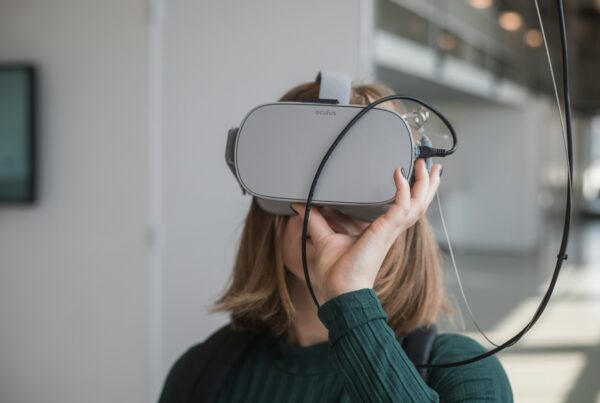
Photo by Giammarco Boscaro
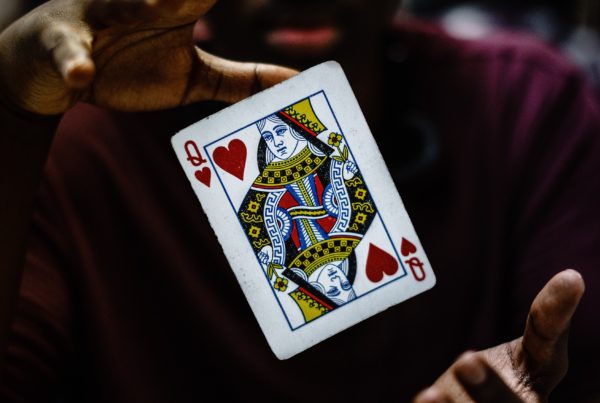
Photo by Giammarco Boscaro
Two major societal transformations in the 20th century have radically transformed the way we send and receive the information upon which we base our beliefs. The first being the global shift towards individualism (Santos et al., 2017). During this transformation, Western societies have generally ‘loosened’ the societal ties between individuals (Hofstede, 2011). In the highly individualistic societies of today everybody is expected to look after themselves and their personal achievement. Independence is highly valued over group loyalty or conformity . Despite the tremendous social freedom brought by the social movement of individualism, these hyper-individualistic societies have their drawbacks.
Related to the rise of individualism is the second major societal transformation of the 20th century: mass consumerism. The shift towards consumerism started in the early 20th century, where marketers started to shift from advertising based on needs to advertising based on desires. Some in that time were convinced modern society could not be stable without individuals constantly desiring the next consumption. Edward Bernays, a pioneer of public relations and nephew of Sigmund Freud, who applied psychology and propaganda techniques to achieve mass persuasion, stated the following:
“The conscious and intelligent manipulation of the organized habits and opinions of the masses is an important element in democratic society”(Bernays, 1928).
He was not alone in this conviction, and he was made a rich man by both government and corporations for his knowledge on persuasion. Corporations fueled by greed and profit, and governments by the necessity for stability as a regulatory force during the many tumultuous events of the 20th century (Curtis, 2002).
“[The imaginal] is the in-between space where individual and collective image-production overlap”
Today’s society is no different. The principles remain the same, but the fight for influence over masses has gained several new dimensions. It is within this domain that the values and building blocks which shaped our system have started to crumble. The possibility for social life in all its varieties in online spaces has driven an increase in individualism and mass consumerism. Friends, food, and clothes are a click away. Whenever one actor in this system influences the action of another, a power relation arises. This is what Foucault understood as power. It is not something you possess; power is “an action upon the action of others” (Patton, 2018). Perhaps contrary to expectation, power is exercised more easily within free environments. The degree of freedom in any system can be thought of as the malleability of a material. In malleable structures ‘atoms’ can move more freely. Therefore, modern forms of power operate most efficiently by shaping norms, knowledge and incentives without the fabric of society becoming any less free to ‘move’.
It is here that mass online media consumption takes a turn for the worse. In hyper-individualistic societies—Australia, Denmark, the Netherlands, and the USA are all prime examples—individuals have become increasingly detached from their communities. In their place have come digital environments in the form of feeds shaped by algorithms. It is here where individuals make sense of the world. It is this space that increasingly shapes the shared field of images, narratives, and symbols. Italian philosopher Chiara Bottici defines this shared space as the ‘imaginal’. The imaginal is neither the image, the individual imagination or some imaginary thing. It is the in-between space where individual and collective image-production overlap. Bottici argues it is only through the imaginal that we can understand the political power that images hold. As politics operates less through arguments and increasingly through ‘imaginal’ images driven by media, individuals become overloaded by possibilities. Shaping the imaginal happens during many moments of daily life: watching the news, scrolling on social media, watching a documentary or sharing videos between friends are all places where the ‘imaginal’ is shaped. Consequently, as time spent online increases, so does consumption of information from mass platform-spaces where content is curated primarily for engagement, profit, and political influence. It is this environment that has made it so challenging for individuals to remain aware of the influences that shape the digital input received.
So what can be done to resist these large forces of influence – the powerful actors on the actions of others? Let Foucault aid us once more, this time in his saying “Where there is power, there is resistance”. To remain truly free, it is imperative to prevent the consolidation of power in domination, for only then would resistance cease to exist. Domination in this case would be a scenario where the fabric of society ‘hardens’ and favours those in power. To resist those seeking to shape the ‘imaginal’, societal expectations and frameworks created by those in power must be rejected. It is in this rejection that authenticity and true individual character are found.
“Where there is power, there is resistance”
The 20th century philosopher Heidegger provides further insight on how to understand technology in his essay ‘The Question Concerning Technology’. In this essay, technology is understood as a way of revealing, or ‘Entbergen’: a mode through which humans understand and interact with the world. He draws a stark contrast between traditional revealing and that of modern technology. Traditional technology revealed the world naturally without human domination. Modern technology takes everything as a resource to be exploited. By reducing the world to resources, modern technology frames reality as raw material. As such, ‘Entbergen’ or ‘revealing’ in modern technology shapes not only the natural environment but also the personal experience. Heidegger warns his readers against adopting this worldview, where the exploitation of everything is placed central. It is here that sense of authenticity will be lost (Heidegger & Lovitt, 1977). The best example of this is the contrast of experiencing a forest as ‘timber potential’ vs experiencing it as a living ecosystem.
How can we find resistance against the power exercised upon the imaginal? The answer Heidegger provides is elegant and simple. To reject conformity in thinking—oppression on the imaginal—is to own your own existence. Reject imposed possibilities and refuse domination over the imagination that the authentic individual creates and maintains. In practice, this translates to simple but tangible commitments. Remain connected to the people close to you, care for them and the community. Critically reflect on your desires (remember Bernays) and make choices aligned with your understanding of meaning, not with socially celebrated narratives. In order to do so, question cultural narratives and resist consumerist and/or media-driven imagination, for these impulses are not provided with your own interest in mind. Create personal meaning, ownership and share this with your community. For in the end, we are together.
References
- Bernays, E. (1928). Propaganda. https://goodtimesweb.org/industrial-policy/2014/PropagandaedwardBernays1928.pdf
- Curtis, A. (Director). (2002, March 17). The Century of the Self [Documentary]. BBC.
- Heidegger, Martin., & Lovitt, William. (1977). The question concerning technology, and other essays. Harper & Row.
- Hofstede, G. (2011). Dimensionalizing cultures: the Hofstede model in context. Online Readings in Psychology and Culture, 2(1). https://doi.org/10.9707/2307-0919.1014
- Patton, P. R. (2018). The reception and evolution of Foucault’s political philosophy. Kritike, 12(2), 1–21.
- Santos, H. C., Varnum, M. E. W., & Grossmann, I. (2017). Global increases in individualism. Psychological Science, 28(9), 1228–1239. https://doi.org/10.1177/0956797617700622
Two major societal transformations in the 20th century have radically transformed the way we send and receive the information upon which we base our beliefs. The first being the global shift towards individualism (Santos et al., 2017). During this transformation, Western societies have generally ‘loosened’ the societal ties between individuals (Hofstede, 2011). In the highly individualistic societies of today everybody is expected to look after themselves and their personal achievement. Independence is highly valued over group loyalty or conformity . Despite the tremendous social freedom brought by the social movement of individualism, these hyper-individualistic societies have their drawbacks.
Related to the rise of individualism is the second major societal transformation of the 20th century: mass consumerism. The shift towards consumerism started in the early 20th century, where marketers started to shift from advertising based on needs to advertising based on desires. Some in that time were convinced modern society could not be stable without individuals constantly desiring the next consumption. Edward Bernays, a pioneer of public relations and nephew of Sigmund Freud, who applied psychology and propaganda techniques to achieve mass persuasion, stated the following:
“The conscious and intelligent manipulation of the organized habits and opinions of the masses is an important element in democratic society”(Bernays, 1928).
He was not alone in this conviction, and he was made a rich man by both government and corporations for his knowledge on persuasion. Corporations fueled by greed and profit, and governments by the necessity for stability as a regulatory force during the many tumultuous events of the 20th century (Curtis, 2002).
“[The imaginal] is the in-between space where individual and collective image-production overlap”
Today’s society is no different. The principles remain the same, but the fight for influence over masses has gained several new dimensions. It is within this domain that the values and building blocks which shaped our system have started to crumble. The possibility for social life in all its varieties in online spaces has driven an increase in individualism and mass consumerism. Friends, food, and clothes are a click away. Whenever one actor in this system influences the action of another, a power relation arises. This is what Foucault understood as power. It is not something you possess; power is “an action upon the action of others” (Patton, 2018). Perhaps contrary to expectation, power is exercised more easily within free environments. The degree of freedom in any system can be thought of as the malleability of a material. In malleable structures ‘atoms’ can move more freely. Therefore, modern forms of power operate most efficiently by shaping norms, knowledge and incentives without the fabric of society becoming any less free to ‘move’.
It is here that mass online media consumption takes a turn for the worse. In hyper-individualistic societies—Australia, Denmark, the Netherlands, and the USA are all prime examples—individuals have become increasingly detached from their communities. In their place have come digital environments in the form of feeds shaped by algorithms. It is here where individuals make sense of the world. It is this space that increasingly shapes the shared field of images, narratives, and symbols. Italian philosopher Chiara Bottici defines this shared space as the ‘imaginal’. The imaginal is neither the image, the individual imagination or some imaginary thing. It is the in-between space where individual and collective image-production overlap. Bottici argues it is only through the imaginal that we can understand the political power that images hold. As politics operates less through arguments and increasingly through ‘imaginal’ images driven by media, individuals become overloaded by possibilities. Shaping the imaginal happens during many moments of daily life: watching the news, scrolling on social media, watching a documentary or sharing videos between friends are all places where the ‘imaginal’ is shaped. Consequently, as time spent online increases, so does consumption of information from mass platform-spaces where content is curated primarily for engagement, profit, and political influence. It is this environment that has made it so challenging for individuals to remain aware of the influences that shape the digital input received.
So what can be done to resist these large forces of influence – the powerful actors on the actions of others? Let Foucault aid us once more, this time in his saying “Where there is power, there is resistance”. To remain truly free, it is imperative to prevent the consolidation of power in domination, for only then would resistance cease to exist. Domination in this case would be a scenario where the fabric of society ‘hardens’ and favours those in power. To resist those seeking to shape the ‘imaginal’, societal expectations and frameworks created by those in power must be rejected. It is in this rejection that authenticity and true individual character are found.
“Where there is power, there is resistance”
The 20th century philosopher Heidegger provides further insight on how to understand technology in his essay ‘The Question Concerning Technology’. In this essay, technology is understood as a way of revealing, or ‘Entbergen’: a mode through which humans understand and interact with the world. He draws a stark contrast between traditional revealing and that of modern technology. Traditional technology revealed the world naturally without human domination. Modern technology takes everything as a resource to be exploited. By reducing the world to resources, modern technology frames reality as raw material. As such, ‘Entbergen’ or ‘revealing’ in modern technology shapes not only the natural environment but also the personal experience. Heidegger warns his readers against adopting this worldview, where the exploitation of everything is placed central. It is here that sense of authenticity will be lost (Heidegger & Lovitt, 1977). The best example of this is the contrast of experiencing a forest as ‘timber potential’ vs experiencing it as a living ecosystem.
How can we find resistance against the power exercised upon the imaginal? The answer Heidegger provides is elegant and simple. To reject conformity in thinking—oppression on the imaginal—is to own your own existence. Reject imposed possibilities and refuse domination over the imagination that the authentic individual creates and maintains. In practice, this translates to simple but tangible commitments. Remain connected to the people close to you, care for them and the community. Critically reflect on your desires (remember Bernays) and make choices aligned with your understanding of meaning, not with socially celebrated narratives. In order to do so, question cultural narratives and resist consumerist and/or media-driven imagination, for these impulses are not provided with your own interest in mind. Create personal meaning, ownership and share this with your community. For in the end, we are together.
References
- Bernays, E. (1928). Propaganda. https://goodtimesweb.org/industrial-policy/2014/PropagandaedwardBernays1928.pdf
- Curtis, A. (Director). (2002, March 17). The Century of the Self [Documentary]. BBC.
- Heidegger, Martin., & Lovitt, William. (1977). The question concerning technology, and other essays. Harper & Row.
- Hofstede, G. (2011). Dimensionalizing cultures: the Hofstede model in context. Online Readings in Psychology and Culture, 2(1). https://doi.org/10.9707/2307-0919.1014
- Patton, P. R. (2018). The reception and evolution of Foucault’s political philosophy. Kritike, 12(2), 1–21.
- Santos, H. C., Varnum, M. E. W., & Grossmann, I. (2017). Global increases in individualism. Psychological Science, 28(9), 1228–1239. https://doi.org/10.1177/0956797617700622