
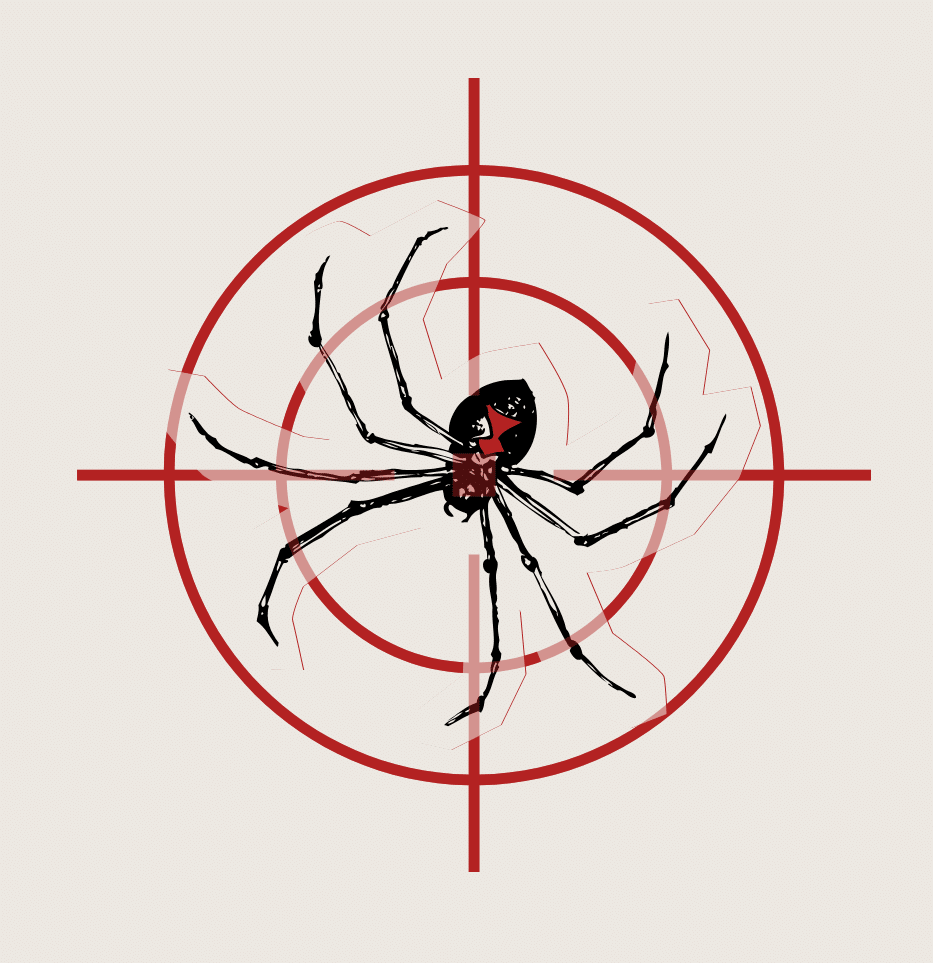
There is a tiny spider on the window frame in my bedroom. I shiver for a second—an instinct to get rid of it, by any means necessary. Let he who has never hesitated to smack a pesky bug throw the first shoe. But, as I approach it, I am flooded with a wave of empathy for this creature, no bigger than the tip of a matchstick—I cannot kill it for the crime of being small, and the first seeds of guilt settle.
An empty tealight holder and post-it note appear in my hands to conduct the perilous mission of capture and release, and as I evict the unwelcome guest, I remember all these facts about spiders, picked up from un-factchecked online rumors, and the seeds bloom. House spiders cannot survive outside. I am sending it out to a certain death.
Too late I realize there are no good options. If I cannot withstand its presence, I have only two terrible choices. I spare its life, letting it out into the wild, and know that I am submitting it to strife, a slow and miserable end. Or I could have forgone the suffering, offering a death that is quick, but untimely. Either way, the blood stains my hands.
I have thought myself into a corner, a trolley problem of my own creation. It is pertinent to notice that the people tied down onto the tracks are not random strangers, nor loved ones, not even the slew of spiders I inadvertently murdered with perceived kindness over the years—I am the conductor, yes, but I am also all six victims. I am the tracks, the trolley, the lever.
I know how to weave a beautiful day into a moral dilemma, a murder-mystery-to-be. This is a skill I have generalized to all areas of my life. I can convolute a dinner party into a relational game of musical chairs, assigning to my seat a degree of closeness between myself and each guest. A number, any number, into a point on the scale of my value. An ache into a fatality, a pleasure into a guilt, a coincidence into a warning. Once I find a thread to latch onto, there is no telling what I can spin out of it, and what I will do to prevent a perceived tragedy from unravelling.
As I watch the spider scurry away hastily I wonder, if in the enormity of its fear it realizes that I, too, am terrified of myself.
I keep washing my hands, trying to get rid of the bright red stains. Days pass, and when I come back to my bedroom, I see the spider returning to my windowsill, to a quaint web nestled next to the night lamp. The unexpected homecoming offers the unforeseen storyline of relief I had been longing for. My hands, for the time being, are clean again. Perhaps we can learn to just let each other be.
There is a tiny spider on the window frame in my bedroom. I shiver for a second—an instinct to get rid of it, by any means necessary. Let he who has never hesitated to smack a pesky bug throw the first shoe. But, as I approach it, I am flooded with a wave of empathy for this creature, no bigger than the tip of a matchstick—I cannot kill it for the crime of being small, and the first seeds of guilt settle.
An empty tealight holder and post-it note appear in my hands to conduct the perilous mission of capture and release, and as I evict the unwelcome guest, I remember all these facts about spiders, picked up from un-factchecked online rumors, and the seeds bloom. House spiders cannot survive outside. I am sending it out to a certain death.
Too late I realize there are no good options. If I cannot withstand its presence, I have only two terrible choices. I spare its life, letting it out into the wild, and know that I am submitting it to strife, a slow and miserable end. Or I could have forgone the suffering, offering a death that is quick, but untimely. Either way, the blood stains my hands.
I have thought myself into a corner, a trolley problem of my own creation. It is pertinent to notice that the people tied down onto the tracks are not random strangers, nor loved ones, not even the slew of spiders I inadvertently murdered with perceived kindness over the years—I am the conductor, yes, but I am also all six victims. I am the tracks, the trolley, the lever.
I know how to weave a beautiful day into a moral dilemma, a murder-mystery-to-be. This is a skill I have generalized to all areas of my life. I can convolute a dinner party into a relational game of musical chairs, assigning to my seat a degree of closeness between myself and each guest. A number, any number, into a point on the scale of my value. An ache into a fatality, a pleasure into a guilt, a coincidence into a warning. Once I find a thread to latch onto, there is no telling what I can spin out of it, and what I will do to prevent a perceived tragedy from unravelling.
As I watch the spider scurry away hastily I wonder, if in the enormity of its fear it realizes that I, too, am terrified of myself.
I keep washing my hands, trying to get rid of the bright red stains. Days pass, and when I come back to my bedroom, I see the spider returning to my windowsill, to a quaint web nestled next to the night lamp. The unexpected homecoming offers the unforeseen storyline of relief I had been longing for. My hands, for the time being, are clean again. Perhaps we can learn to just let each other be.